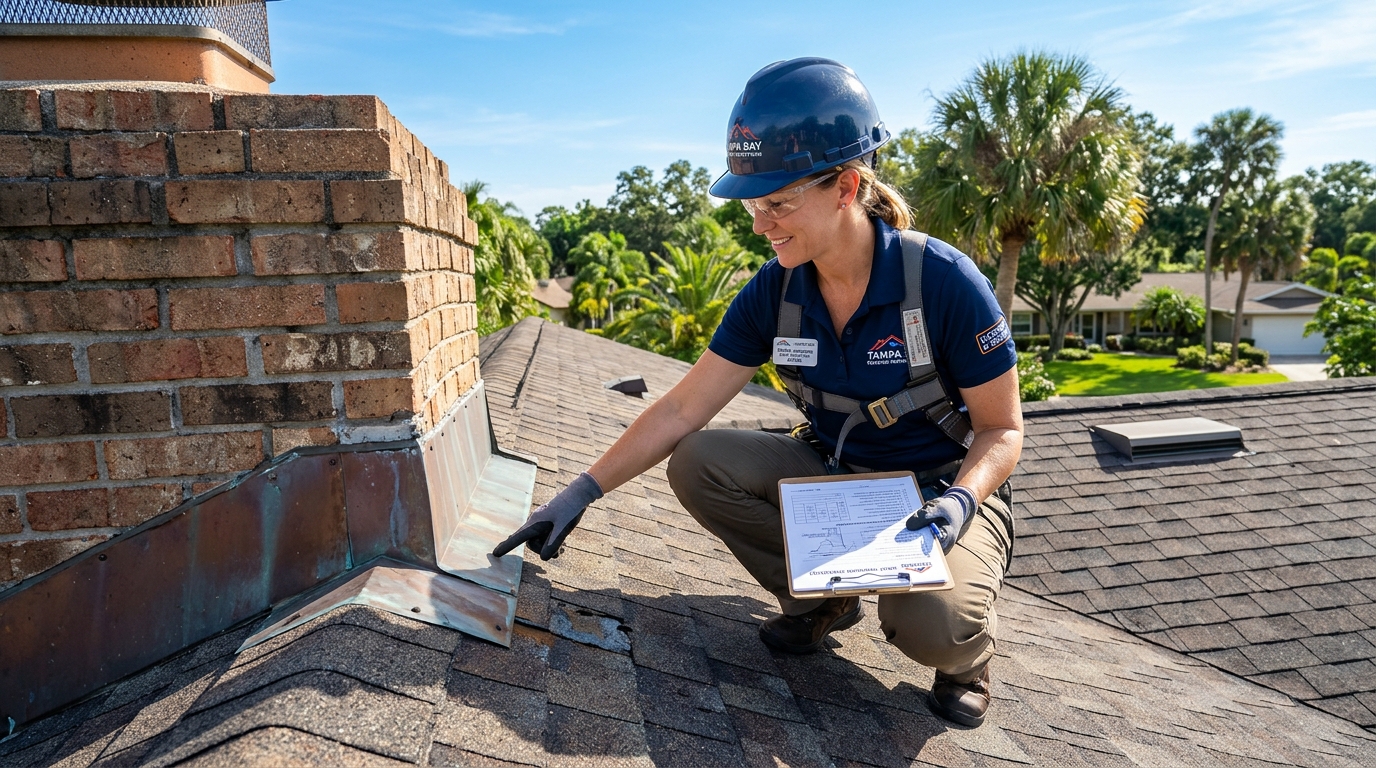
A serious roof failure rarely begins with a catastrophic torrent of water pouring through your living room ceiling. It starts quietly: a missing shingle after a summer squall, a subtle water ring in an upstairs bedroom, or rusted metal step flashing separating along an exterior wall.
The Early Warning Rule: These subtle indicators may look minor from the driveway, but they allow moisture to penetrate roof decking, soak attic insulation, and rot rafter framing weeks or months before a stain becomes visible inside your home. Catching defects early makes the difference between an affordable targeted repair and an emergency reroof.
For Tampa homeowners, regular visual checks are essential following severe afternoon thunderstorms and tropical storm systems. High-velocity winds peel unsealed shingle tabs, while torrential downpours quickly exploit microscopic gaps around plumbing boots, chimney crickets, and valley transitions.
This homeowner guide examines the 10 most common signs your roof needs repair, what each symptom indicates, what you can safely observe from the ground, and how licensed mechanics permanently correct the issue.
Homeowner Safety Warning: Never climb onto a wet, steep, or storm-damaged roof. Ground-level visual checks with binoculars or smartphone zoom are far safer. If a ceiling is actively bowing or water is dripping near electrical fixtures, seek immediate professional assistance.
1. Water Stains on Ceilings or Walls
Water rarely travels straight down. Once rain breaches a damaged shingle or transition flashing, it often trickles along roof trusses, runs down electrical conduit, or pools across horizontal ceiling drywall before soaking through. The visible ceiling stain may be 10 or 15 feet away from the actual roof entry point.
Plumbing supply lines, second-story shower pans, and clogged HVAC condensate drain lines can produce identical water marks. A professional inspection determines whether the source is the building envelope or an internal mechanical system.
If water is currently entering your home, contact Roof Work immediately for our roof repair service. For storm emergencies requiring rapid dry-in tarping, visit our emergency roof repair service.
2. Missing, Cracked, or Curling Shingles
High tropical winds can break the factory thermal sealant strip between shingles, allowing tabs to flutter and snap. Prolonged attic heat also bakes asphalt shingles, causing thermal embrittlement and cupping.
When a shingle tab tears away, the underlying black underlayment is exposed directly to intense Florida sun. Underlayment degrades rapidly under direct UV exposure, leading to leaks during the next storm.
For isolated tab damage, our technicians perform targeted tab replacements. If brittleness spans entire slopes, review our comprehensive options for shingle roofing or a full roof replacement.
3. Excessive Granules Collecting in Gutters
A minimal amount of granule shedding is normal on newly installed roofs. However, heavy, persistent granule loss on roofs older than 10 years indicates the protective asphalt coating is eroding. Mineral granules shield the delicate fiberglass backing from ultraviolet breakdown. Once shingles lose their granules, the fiberglass base cracks and leaks follow quickly.
If surface wear is confined to specific slopes, start with a professional roof repair assessment. If multiple planes show widespread bald patches, compare repair costs against roof replacement.
4. Loose, Rusted, or Damaged Roof Flashing
Flashing assemblies channel thousands of gallons of rainwater away from vulnerable vertical wall intersections. Thermal expansion, building settling, and dried mastic can cause metal to pull away from mortar joints or fascia boards.
Smearing roofing tar over an open flashing gap is a temporary band-aid that usually fails within months. True water-tightness requires fabricating and installing proper step and counter-flashing. Explore our dedicated flashing repair service for custom sheet-metal solutions.
5. A Sagging Roofline or Uneven Roof Surface
A sagging roofline indicates a serious structural compromise. Common culprits include prolonged water intrusion rotting plywood decking, broken roof truss webs, undersized rafters, or excess weight from multiple shingle layers.
This condition demands urgent professional evaluation. If interior ceilings are bowing, cracking, or showing signs of structural displacement, evacuate the room and schedule an immediate assessment through our roof repair service.
6. Daylight Visible Through the Roof in Your Attic
If daylight can enter your attic, wind-driven rain can enter as well. While designed ridge vents and soffit intakes intentionally admit airflow, light visible through the solid field of plywood decking indicates separated sheathing, nail pull-through, or missing flashing.
Never block intentional ventilation openings. A qualified technician conducting a roof repair inspection will determine whether light stems from an engineered vent or a hazardous structural breach.
7. Moss, Algae, or Persistent Organic Growth on the Roof
While black algae streaks (gloeocapsa magma) are primarily an aesthetic issue, thick moss is destructive. Moss acts like a sponge, holding moisture against asphalt shingles and lifting tab edges during freezing or windy conditions.
Never use a pressure washer on asphalt shingles. High-pressure water blasts away the protective granule coating and cuts shingle life in half. If shingles beneath moss have degraded, schedule a shingle roofing service or targeted roof repair.
8. Gutters Overflow, Pull Away, or Fill With Roofing Debris
When gutters clog, water backs up behind the aluminum drip edge, soaking the fascia board and rotting the edge of the plywood roof deck. Over time, heavy water-logged gutters pull loose, ripping fasteners directly out of rotted wood.
If your roof perimeter shows rotting wood or water entering behind the eaves, schedule an on-site roof repair assessment to repair the wood deck edge and restore proper water drainage.
9. A Sudden Increase in Energy Bills
When roof leaks wet attic fiberglass or cellulose insulation, the insulation compresses and loses its R-value thermal resistance. Saturated insulation allows outdoor heat to radiate directly down into ceilings, forcing air conditioning compressors to run continuously.
As detailed in the U.S. Department of Energy attic air-sealing guidelines, proper roof sealing and dry insulation are fundamental to home efficiency. If high bills accompany roof staining, inspect your envelope through our residential roofing services or schedule a roof repair assessment.
10. Your Roof Is Aging and Developing Repeated Problems
When an asphalt shingle roof reaches 15 to 20 years in Florida, the entire material matrix begins to fail simultaneously. At this stage, fixing one leak simply shifts water pressure to the next brittle seam. Continued piecemeal repairs become a financial sinkhole.
Compare the cumulative cost of ongoing repairs with a complete roof replacement to evaluate whether a new system with a 30 to 50-year warranty offers superior financial protection.
Roof Damage Diagnostic Guide: Match the Warning Sign to the Next Step
Use this practical action table to plan your next maintenance step:
| What You Notice | Probable Underlying Cause | Recommended Immediate Action |
|---|---|---|
| Fresh ceiling stain after rain | Roof penetration leak or flashing gap | Photograph stain and book professional diagnostic check |
| Shingles missing after high wind | Wind uplift or broken sealant strip | Schedule targeted tab repair before underlayment degrades |
| Heavy granule loss with bare patches | Asphalt binder failure or storm erosion | Evaluate remaining useful lifespan of field shingles |
| Rusted metal along chimney or vent | Flashing joint separation or seal fatigue | Fabricate new custom step or counter flashing |
| Visible roof sag or dipping ridge | Deck rot or structural truss damage | Request urgent engineering and structural evaluation |
| Sunlight visible through roof decking | Unsealed decking seam or dislodged boot | Differentiate designed vent from structural hole |
| Thick moss carpet on shingle edges | Trapped moisture and premature aging | Apply gentle treatment; avoid high-pressure washing |
| Gutters overflowing and pulling away | Fascia wood rot or blocked downspout | Clear drainage path and inspect eave deck edge |
| Sudden unexplained AC bill increase | Wet insulation or inadequate attic airflow | Inspect attic insulation moisture levels and roof vents |
| Repeated leaks on a 15+ year old roof | Systemic material end-of-life fatigue | Compare repair estimates against full reroofing scope |
When Is Roof Damage an Emergency?
Not every roofing defect requires an immediate middle-of-the-night callout. However, several conditions demand rapid emergency dry-in containment:
Active Torrential Water Intrusion
When rainwater is pouring into ceilings during an active storm, immediate tarping prevents catastrophic drywall collapse and flooring destruction.
Water Entering Near Electrical Fixtures
Never touch wet ceiling light fixtures or electrical panel areas. Shut off power at the main breaker and request emergency technical response.
Major Tree Branch Impacts or Structural Sags
Punctured roof decks and broken trusses require immediate temporary support and heavy-duty storm tarping to protect structural stability.
For immediate water mitigation across Tampa Bay, check our emergency roof repair desk or explore storm damage roof repair.
What to Ask a Roofer Before Approving a Repair
Before signing any repair authorization, ensure your contractor provides detailed answers to these six vital questions:
- What exact component is compromised? Request clear drone or camera photos showing the defect.
- What caused the failure? Is it an isolated installation flaw or widespread shingle wear?
- Does the scope inspect the wood decking? Replacing surface shingles without checking underlying wood rot is wasted money.
- Why is repair recommended over replacement? Request clear condition-based reasoning.
- Are all materials, labor, and warranties itemized? Confirm written pricing before work commences.
- Can you verify state licensing credentials? Verify that the contractor holds an active Florida license through the DBPR construction licensing portal.
Frequently Asked Questions
What are the first signs that a roof needs repair?
The earliest indicators are missing or lifted shingles, fine hairline cracks around pipe flashings, heavy granule accumulation in gutters, and subtle yellow ceiling stains. The absence of an active drip does not mean your roof is watertight.
Should I repair a missing shingle if the roof is not leaking?
Yes, absolutely. Missing shingles expose the thin secondary underlayment directly to intense Florida sun. Underlayment deteriorates within weeks under direct UV light, turning a simple twenty-minute repair into an expensive attic leak.
Does granule loss mean I need a new roof?
Not necessarily. Mild granule shedding occurs naturally over time. However, if your shingles display bald fiberglass spots, widespread curling, or heavy gutter sand deposits, the shingles are approaching end-of-life and reroofing should be evaluated.
Can a roof be repaired instead of replaced?
Yes, whenever damage is localized to a specific penetration, pipe boot, or small wind-damaged section and the surrounding roof remains pliable. When deterioration spans multiple slopes or decking rot is pervasive, replacement is the more reliable investment.
How quickly should I have roof damage inspected?
Active water leaks, visible roof sagging, or storm impacts require same-day emergency inspection. Displaced shingles or flashing gaps should be inspected within 48 to 72 hours before the next Tampa thunderstorm arrives.
SUSPECT ROOF DAMAGE?
Get a Clear Diagnosis Before Damage Spreads
A missing shingle or ceiling spot does not automatically mean you need a new roof. Speak directly with our state-certified mechanics for an honest, photo-documented evaluation and upfront pricing.