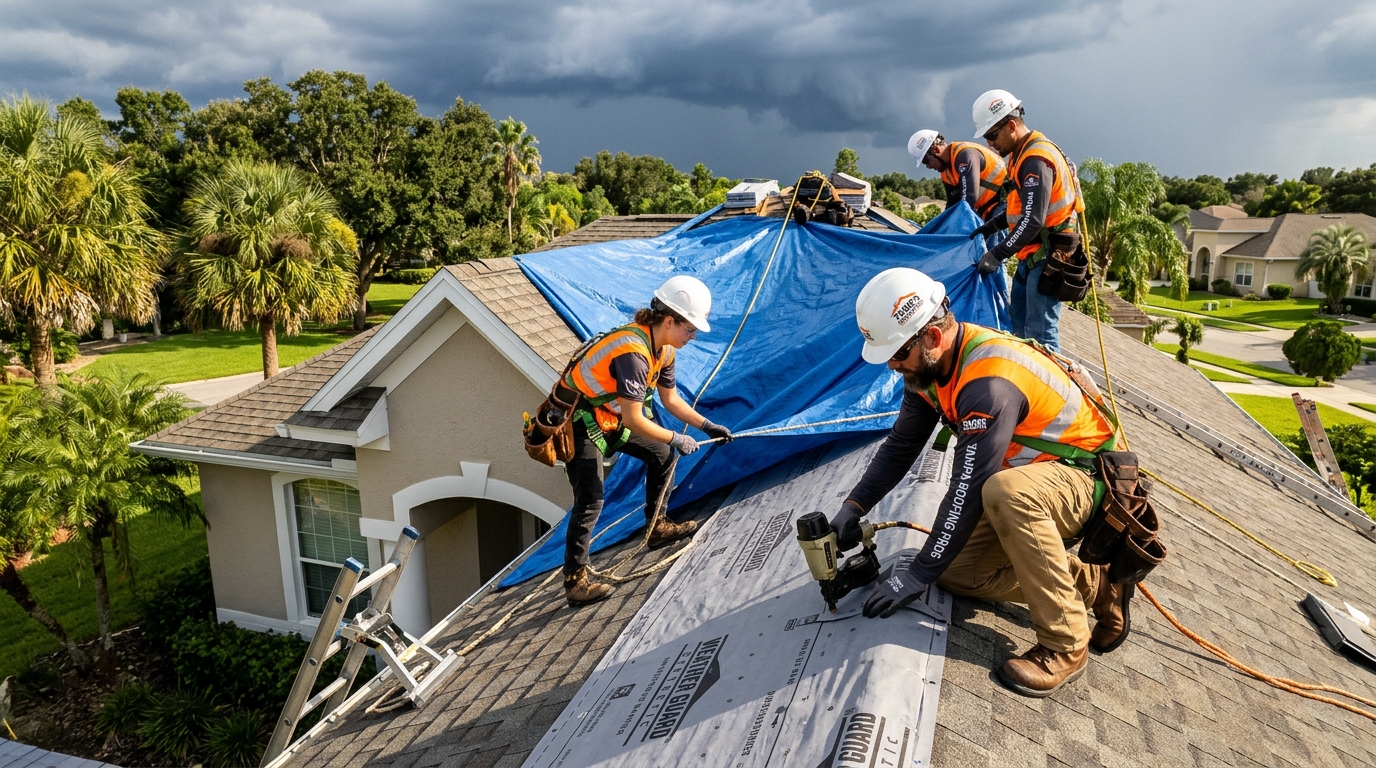
Yes, a roof can be replaced during Tampa's rainy season, but the crew must plan rigorously around the weather and protect the exposed roof before rain arrives.
The Core Real-World Truth: Rain does not make a roof replacement impossible. However, active rainfall, saturated plywood decking, lightning strikes, high winds, and rapidly approaching thunderstorms make certain phases of roofing unsafe and technically unacceptable. The real question is whether your contractor executes a phased exposure plan or recklessly strips your entire house open at once.
Tampa's subtropical rainy season typically spans from May through October, characterized by intense afternoon convective thunderstorms and tropical moisture plumes. If your roof is leaking, past its useful life, or damaged by high winds, waiting six months until winter is often risky and impractical. Water leaking into an attic all summer breeds toxic black mold and rots roof rafters.
This guide explains exactly how rainy season roof replacement works in Tampa, what safeguards to demand from your roofer, when work must pause, and how to protect your home.
Can Roofers Replace a Roof During Florida's Rainy Season?
Yes. Reroofing occurs daily across Hillsborough County between May and October. Experienced roofing mechanics manage summer projects successfully by working in calibrated stages and securing continuous watertight dry-ins.
The essential distinction is between replacing a roof during the rainy season and installing materials while it is actively raining. These are completely different scenarios:
- What professional crews do: Track live high-resolution Doppler radar, start at daybreak, strip only manageable roof planes, inspect and dry the decking, install self-adhering secondary water barriers immediately, and seal all penetrations before afternoon clouds develop.
- What no reputable crew should ever do: Nail down shingles or modified bitumen while water is actively sheeting across the decking. Installing materials over wet substrates traps moisture, causes deck rot, and voids manufacturer warranties.
Three primary criteria govern whether a rainy season project should proceed on any given day:
Doppler Radar and Weather Conditions
The percentage probability of rain, thunderstorm development vectors, localized cloud-to-ground lightning warnings, and the available dry installation window.
Current Structural Roof Condition
Whether the existing roof assembly can safely wait for a multi-day clear stretch or whether active indoor leaks require rapid emergency intervention.
Installation Staging and Crew Capacity
Whether the contractor employs a dedicated, full in-house crew capable of completing decking repairs and securing code-compliant underlayment within hours.
If your roof is actively dripping into your living space, start by exploring roof repair in Tampa or immediate dry-in emergency roof repair before assuming total replacement is the only path.
How Roof Replacement Works During Tampa's Rainy Season
A professional summer reroofing project never relies on good luck. It follows five strict operational protocols:
1. Continuous Micro-Climate Forecast Monitoring
A standard morning news broadcast forecast is useless for Tampa roofing. Convective sea breeze collisions can trigger torrential microbursts over Carrollwood or South Tampa while Plant City remains sunny. Roofing supervisors must actively monitor live mobile radar, lightning proximity sensors, and National Weather Service alerts throughout the day.
2. Phased Tear-Off: Opening Only What Can Be Dried-In
Stripping a 3,000 square foot home completely down to bare plywood on a July morning is reckless. If an unpredicted storm cell blossoms at 1:00 PM, exposed attics will flood within minutes.
Instead, responsible roofers utilize a phased tear-off strategy: stripping one or two roof planes at a time, replacing damaged plywood sheets, and immediately sealing that section with secondary water barrier underlayment before opening the next slope.
3. Inspecting and Drying Decking Before Covering
Once old shingles come off, crews inspect the structural wood sheathing for spongy rot, delaminated OSB, and rusted nail shank patterns. If a brief passing shower dampens exposed decking, the crew must allow the wood surface to dry fully before installing peel-and-stick membranes. Trapping moisture beneath underlayment causes wood mold and adhesive failure.
4. Installing Code-Compliant Self-Adhering Underlayment
Under Florida Building Code, modern roofs require a sealed roof deck. In rainy season, premium self-adhering modified bitumen underlayment (peel-and-stick) or taped synthetic underlayment provides exceptional resistance against wind-driven rain even before surface shingles or tiles are fastened.
To learn more about shingle application rules, review our guide on shingle roofing installation.
5. Securing the Roof Perimeter Before Leaving
Before crews depart each afternoon, the site supervisor must inspect all valley junctions, eave drip edges, plumbing vent boots, and chimney flashings. Any unfinished sections must be battened down with industrial heavy-duty 12-mil reinforced tarps mechanically secured with 2x4 furring strips to withstand 50 mph thunderstorm wind gusts.
What Happens If It Starts Raining During Roof Replacement?
When a storm suddenly approaches, the crew must immediately trigger a rehearsed weather response plan based on the active stage of the installation:
| Project Stage | Immediate Crew Action | Protection Measure |
|---|---|---|
| Before Tear-Off Begins | Postpone the morning start if heavy radar echoes are approaching. | Existing roof covering remains completely intact and waterproof. |
| During Shingle Tear-Off | Stop removing shingles immediately; halt tear-off progression. | Deploy heavy-duty waterproof tarps over the stripped perimeter. |
| Decking Exposed & Uncovered | Inspect wood surface, pause wood repairs, and sweep debris. | Mechanically fasten battened reinforced tarps over open rafter bays. |
| During Underlayment Rollout | Complete the active roll, seal all laps, and cap open edges. | Self-adhering membrane seals deck joints against vertical rain intrusion. |
| During Shingle / Tile Fastening | Pause installation immediately when deck or shingle surfaces get wet. | Secure loose bundles, tape valleys, and cover unfinished ridge vents. |
| End of Workday | Conduct whole-roof inspection before site departure. | Verify all edges, flashings, and temporary covers are wind-rated. |
Homeowner Safety Warning: Never climb onto a wet roof during or immediately after a storm to inspect contractor tarps. Wet shingles and slick underlayment are extremely dangerous slip hazards. Contact your project supervisor directly; our in-house mechanics handle all on-roof inspections.
Is It Better to Wait Until Tampa's Dry Season?
Not necessarily. Homeowners often ask if they should postpone replacement until November or December. The correct answer depends entirely on your roof's physical condition, not the calendar month alone:
When Waiting Until Winter Is Reasonable
- The roof has zero active leaks and no interior ceiling water staining.
- An attic inspection confirms dry insulation and sound wood decking throughout.
- Shingles exhibit only minor cosmetic granule loss without extensive cracking or curling.
- Your homeowners insurance policy renewal is not facing an imminent non-renewal deadline.
When You Should Never Delay Reroofing
- Water spots on ceilings are spreading or recurring after every afternoon storm.
- Attic inspections reveal damp wood sheathing, soaked insulation, or active dripping.
- High winds from tropical storms have torn off shingles or displaced tile hip caps.
- Flashing has corroded or separated along chimneys, dormers, and valleys.
If recent squalls tore away roofing materials, request our rapid storm damage roof repair. If multiple areas are leaking, schedule a formal roof replacement or re-roofing assessment to evaluate whether a full reroof is necessary.
How Long Does Rainy-Season Roof Replacement Take in Tampa?
Under clear winter skies, a standard single-story Tampa shingle roof can often be torn off and installed in one to two business days. During rainy season, homeowners should expect projects to take approximately two to four days:
- Weather Stoppages: Afternoon storms frequently force a halt to on-roof nailing between 2:00 PM and 5:00 PM.
- Phased Staging: Working in sections requires more time than stripping the whole structure at once.
- Decking Dry-Out Time: If morning humidity or dew dampens plywood, crews must allow surfaces to dry before rolling adhesive barriers.
- Municipal Inspections: City of Tampa and Hillsborough County building inspectors must inspect the dry-in/secondary water barrier before final shingles or tiles are nailed down.
Rainy-Season Roof Replacement Checklist for Tampa Homeowners
Before signing a contract for summer roofing work, review this critical due diligence checklist:
Written Weather Protection Plan
Does the contractor's written estimate explain how radar tracking, phased tear-offs, and unexpected storms will be handled?
Phased Section Staging
Will the crew open only manageable sections that can be sealed before afternoon rain develops?
Secondary Water Barrier Membrane
Is direct-to-deck self-adhering underlayment specified to provide immediate watertight security across the entire deck?
Plywood Deck Inspection Protocol
Does the agreement establish that rotted or wet decking will be assessed, dried, and replaced before being permanently covered?
Battened Tarp Tie-Down Standards
Are heavy-duty reinforced tarps mechanically anchored with 2x4 furring strips at the end of each workday?
Direct Project Desk Communication
Do you have the direct phone number of a local Hillsborough County project supervisor who provides daily weather and schedule updates?
How to Choose a Tampa Roofer for a Rainy-Season Replacement
When selecting a contractor for summer roofing, beware of salespeople who promise that "summer rain doesn't matter" or claim their crew can "work right through heavy downpours." Working on a steep wet roof in lightning is a serious safety violation, and installing shingles over wet wood voids manufacturer warranties.
For complete project information, explore our full solutions for roof replacement and certified residential roofing. For business properties and industrial buildings, see our specialized commercial roofing services.
Frequently Asked Questions
Can you replace a roof during the rainy season in Florida?
Yes. Roof replacements are safely scheduled between May and October across Tampa Bay when crews utilize radar tracking, early morning hours, phased tear-offs, and self-adhering secondary water barriers. Work simply pauses when lightning or active rain arrives.
Can roofers install shingles while it is raining?
No. Nailing asphalt shingles or tiles during active rain creates severe fall hazards, prevents proper sealant strip bonding, and traps moisture against the decking. Crews must pause until the rain passes and the substrate is dry.
Will my house flood if rain starts during roof replacement?
A well-managed project is designed specifically to prevent this. By stripping roofs in phased sections and immediately covering decking with sealed synthetic underlayment or mechanically fastened tarps, your home remains weather-tight even if an unexpected storm hits.
Can a roof be left partially stripped overnight?
Bare plywood should never be left exposed overnight. Any unfinished section must either be fully dried-in with code-approved underlayment or sealed with battened heavy-duty tarps secured with 2x4 furring strips before the crew departs.
Does rainy season roof replacement cost more?
No. Legitimate Florida roofing contractors do not charge a rainy season surcharge. Material costs and labor rates remain standard, though the project schedule may require extra days due to weather pauses.
Should I repair my roof now or wait until winter for replacement?
If your roof is leaking, waiting 4 to 6 months until dry season will cause extensive attic wood rot, drywall collapse, and insulation contamination. Get an assessment now to determine if a targeted repair or a phased summer replacement is appropriate.
DON'T WAIT FOR THE NEXT STORM
Schedule a Roof Assessment Before Rain Arrives
If your Tampa roof is leaking or deteriorating, you do not have to wait until winter. Our certified in-house mechanics manage summer reroofing with phased tear-offs, live Doppler tracking, and guaranteed weather protection.