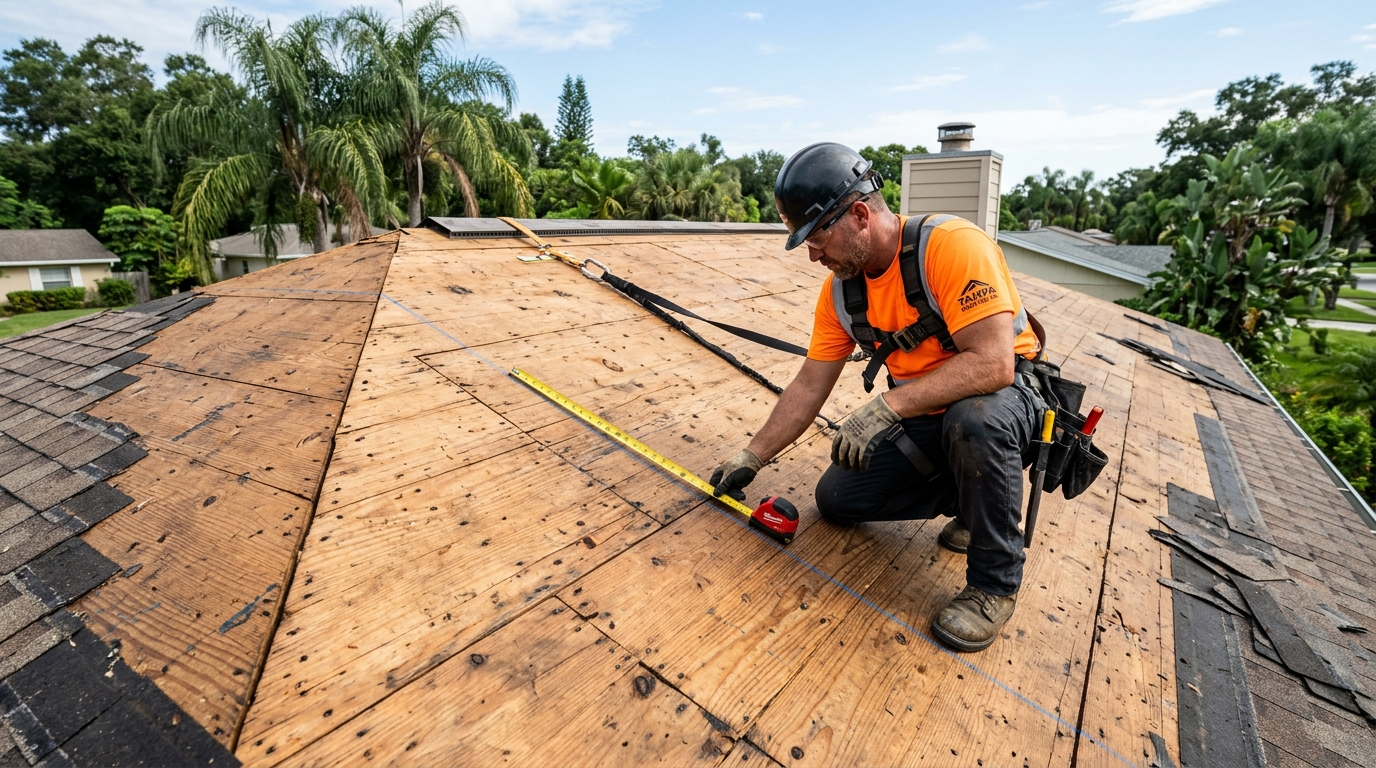
A roof replacement estimate can change once the old shingles or tiles come off and the roof deck is exposed. Damaged plywood, additional roofing layers, deteriorated flashing, or other concealed conditions may require work that could not be confirmed during the initial inspection.
The important question is not simply whether your roofer has requested more money. It is what additional work is necessary, how much it will cost, and whether the charge matches your original agreement.
Before approving a roof replacement change order, ask for clear evidence of the problem, an itemized explanation of the added work, and a written price. These steps can help you distinguish a legitimate adjustment from a charge that needs further clarification.
In Tampa, where heavy rain and humidity can make concealed moisture damage a concern, understanding these details before signing a roofing contract can help you plan for unexpected costs without automatically assuming that every additional charge is justified.
What Is a Roof Replacement Change Order?
A change order is a documented modification to an existing construction agreement. Depending on the contract, it may change the work being performed, the project price, the schedule, or some combination of these.
During a roof replacement, a change order might be proposed when the crew discovers damaged roof decking beneath the existing covering or identifies additional work outside the original scope.
For example, an estimate may include removing the existing shingles and installing new roofing materials but provide a separate allowance for replacing damaged decking. If the crew uncovers more damaged wood than the allowance covers, the contractor may propose an additional charge.
That does not automatically mean the charge is wrong, or that you must accept it without question. Review the original contract, the evidence supporting the work, the proposed price, and the applicable approval terms.
If you are still comparing contractors, review our guide on How to Compare Roofing Estimates Line by Line and check our roof replacement service page to compare written proposals.
1. Hidden Roof Decking Damage Discovered After Tear-Off
The roof deck is the structural surface that supports the roofing system. Depending on the building, it may consist of plywood, oriented strand board (OSB), tongue-and-groove planks, or another approved material.
During an initial inspection, a contractor may be able to identify visible signs of trouble, such as water staining, sagging, damaged shingles, or deterioration around roof penetrations. However, the condition of every part of the deck cannot always be confirmed while the existing roof covering remains in place.
After tear-off, the exposed surface may reveal damage that was previously concealed.
What Can Damage Roof Decking?
- Long-term moisture exposure: Water entering around flashing, valleys, vents, or other roof details may damage the underlying wood. The actual entry point may be some distance from the ceiling stain or other interior symptom.
- Repeated leaks: A roof can have concealed deterioration even when the interior damage appears limited. Conversely, a ceiling stain does not by itself establish how much roof decking needs replacement.
- Wood deterioration: Soft, weakened, delaminated, or otherwise compromised decking may not provide a suitable fastening surface. The appropriate repair depends on the material, condition, location, and applicable installation requirements.
- Pest or structural damage: In some cases, an exposed roof deck may show damage associated with pests or other structural conditions. The contractor should explain what was observed and whether further assessment is needed.
Florida heat and humidity can contribute to moisture-related building problems, but poor attic ventilation should not automatically be blamed for every case of damaged decking. The actual cause needs to be assessed on-site.
What Should You Ask When Damaged Decking Is Found?
Before approving additional work, ask the contractor to:
- Identify the affected roof section and explain what is wrong with the material.
- Show clear photographs of the exposed decking.
- Explain why repair or replacement is being proposed.
- Specify the estimated quantity of material to be replaced (e.g. number of 4x8 plywood sheets or linear feet of framing).
- Explain the unit price and any additional labor or disposal charges.
- Identify whether the proposed work is required by applicable installation requirements, the approved municipal scope, or another specific code condition.
If the damage appears extensive or involves rafters, trusses, or other structural components, ask whether a qualified structural professional or building official needs to be involved.
For an isolated leak or localized deterioration issue before considering a complete replacement, Roof Works' roof repair service may be relevant if the problem is within the company's actual service offering.
2. Plywood Replacement Allowances and Per-Sheet Pricing
Roofing estimates sometimes include an allowance for replacing a limited quantity of damaged decking. Other contracts specify a unit price for additional replacement if concealed damage is discovered.
These arrangements help establish how unexpected work will be priced, but the details matter.
What Should a Decking Allowance Include?
Review the contract for four specific elements:
- Included quantity: How many sheets or what area of decking is included in the base price?
- Material specification: What material and thickness are included (such as 15/32" CDX 4-ply plywood or 7/16" OSB), subject to the existing assembly and Florida Building Code requirements?
- Additional unit price: What fixed rate applies if more decking must be replaced?
- Included work: Does the rate cover materials, installation labor, re-nailing to trusses, removal of damaged material, disposal, or only some of these items?
A price described simply as “per sheet” can be misleading if the contract does not explain what that rate covers. For instance, two estimates may both list a plywood replacement rate, but one may include labor and disposal while the other charges for those items separately. Compare the full scope rather than looking at the unit price alone.
Hypothetical Example: How a Decking Allowance Works
Suppose a contract includes two sheets of replacement decking and states a hypothetical additional rate of $95 per sheet, including materials and labor. After tear-off, the contractor identifies five sheets that need replacement:
Note: This calculation is illustrative only. The actual amount depends on the contract, the approved quantity, the work required, and any other applicable charges. The example does not establish a typical Tampa price or a Roof Works rate.
Before approving the work, confirm whether the original allowance is deducted correctly and whether the proposed quantity is supported by clear on-roof photographs and a written change order.
3. Additional Roofing Layers and Tear-Off Costs
Another possible source of additional work is the discovery of more existing roofing layers than the contractor anticipated during the initial attic or roof-top inspection.
For example, a roof that appears to have one visible shingle surface may contain an older asphalt layer or rolled roofing hidden underneath. Additional layers significantly affect removal labor, weight on the dumpster, debris handling, and the prep work required to bring the substrate back to bare plywood.
However, finding an extra layer does not automatically justify an arbitrary fee. The contractor should explain how the discovery changes the original scope and how the added charge is calculated.
Questions to Ask About Additional Layers
- Did the original estimate specify the number of existing layers assumed?
- What additional material was discovered (e.g., organic felt, cedar shakes, second shingle course)?
- Does the contract already account for multiple layers or their removal?
- How does the additional layer affect labor and disposal tonnage fees?
- Is the proposed charge itemized, and does it overlap with an existing tear-off or disposal charge?
Do not assume that every roofing material follows the same tear-off rules. Applicable requirements depend on the roof system, building conditions, and current code provisions. For Florida projects, consult the Florida Building Commission's code resources for official statewide provisions.
4. Other Conditions That May Increase the Scope of Work
Decking rot and additional roofing layers are not the only possible causes of a change order. Once the roofing system is stripped, the contractor may identify other concealed or previously excluded components requiring remediation:
| Discovered Condition | What May Affect the Price | What to Verify |
|---|---|---|
| Damaged flashing or roof penetrations | Additional custom metal fabrication, pipe boots, and installation labor | Which components need replacement and whether the original scope already included standard flashings |
| Deteriorated underlayment or substrate | Additional adhesive removal, decking scrape-down, and mechanical prep | The affected square footage and the manufacturer's required preparation method |
| Damaged fascia, sub-fascia, or soffits | Carpentry labor, primed lumber materials, and painting/priming prep | Whether wood rot repairs are included in the roofing contract or require a separate carpentry line item |
| Unexpected removal requirements | Extra labor, specialized hazardous handling, and higher landfill disposal fees | What specific unexpected material was uncovered and whether the initial bid addressed standard debris disposal |
| Structural truss or rafter deterioration | Sistering rafters, structural engineering assessment, and municipal inspections | Whether an independent structural engineer or municipal building official must inspect and sign off |
These are possible examples, not a prediction that every project will encounter them. A useful change order identifies the actual condition, the proposed remedy, the quantity of work, and the exact price. Vague descriptions such as “extra repairs” make it impossible to understand what you are paying for.
5. How to Evaluate a Roof Replacement Change Order
When an unexpected charge appears during a roof replacement, use the following five-step process before signing or approving any extra funds:
Compare the Request With Your Original Contract
Review the original scope of work, included allowances, unit prices for extra wood, unforeseen condition clauses, and the formal procedure required for approving extra work.
Request Photographs of the Affected Area
Ask for both close-up images of damaged wood or flashing and wide contextual shots showing where the damage sits on your roof deck before any materials are covered up.
Request an Itemized Breakdown
Ensure the change order details the exact quantity of materials, unit rate, labor charges, disposal fees, and credits for any materials already included in the base bid.
Confirm Whether the Work Is Code-Mandated
If the roofer claims the repair is required by code, verify the applicable requirement with the City of Tampa roofing permit desk or Hillsborough County re-roof inspection guidelines.
Obtain Written Approval Before Additional Work Proceeds
Do not rely on quick verbal discussions while the crew is on the roof. Demand a written change order stating the agreed cost and scope, signed by both parties.
6. Why Photographs and Written Authorization Matter
A verbal explanation can be difficult to verify later, particularly when a project involves multiple crews, changing wood quantities, or several damaged valleys. A clear written record protects both the property owner and the roofing contractor.
Always keep copies of the following documents:
- The original estimate and executed contract
- High-resolution date-stamped photographs of the exposed damage
- The contractor's written diagnostic explanation
- Itemized change orders with clear unit breakdowns
- Your written approvals and signatures
- Revised invoices and matched payment receipts
- Official municipal permit cards and in-progress inspection sign-offs
If decking sheets are replaced, photographs showing the new wood nailed off to trusses before the secondary water barrier (underlayment) is rolled out are essential. Keep these records with your permanent home maintenance file for future insurance renewals or buyer disclosures.
7. Sample Roof Replacement Estimate and Change Order
The following hypothetical example illustrates how a professional roofing contract separates the base scope of work from a potential decking replacement adjustment:
| Line Item Description | Quantity | Hypothetical Unit Rate | Total Amount |
|---|---|---|---|
| Shingle tear-off, fastener pull, and disposal | 22 roofing squares | $75 per square | $1,650.00 |
| ASTM D1970 self-adhering underlayment installation | 2,200 sq. ft. | $0.65 per sq. ft. | $1,430.00 |
| Architectural shingle installation (130 mph wind rated) | 22 roofing squares | $240 per square | $5,280.00 |
| Drip edge, valley metal, and flashing work | 180 linear ft. | $4.25 per ft. | $765.00 |
| Plywood decking replacement allowance | 2 sheets | $95 per sheet | $190.00 |
| Illustrative Base Contract Total: | $9,315.00 | ||
In this example, the base total is $9,315. If tear-off reveals five damaged sheets rather than the included two, the three additional sheets at the pre-agreed $95 unit rate produce a $285 adjustment. The revised contract total would be $9,600.
Example of a Clear Change-Order Clause
Note: This is sample educational wording, not formal legal advice. Have contract terms reviewed by an attorney or qualified construction professional if needed.
8. How to Avoid Unexpected Roofing Charges Before Work Begins
While you cannot inspect every inch of a roof deck until the old covering is stripped off, you can eliminate billing surprises by reviewing these ten questions before signing your proposal:
- Does the estimate describe the exact existing roof covering and planned tear-off scope?
- Does it specify whether additional roofing layers or dumpster disposal tonnage are covered?
- Is roof decking replacement included, excluded, or covered by a defined sheet allowance?
- Are additional plywood and framing labor rates clearly stated in writing per sheet or linear foot?
- Does the agreement explain how concealed rot or damage will be photographed and documented?
- Does it outline the formal written authorization procedure before extra charges are billed?
- Are drip edge, eave metals, valley liners, and wall flashings explicitly detailed in the scope?
- Are unforeseen condition clauses transparent rather than broad open-ended disclaimers?
- Is the progress payment schedule aligned with completed project milestones?
- Do you know which city or county permit fees and dry-in inspections apply to your roof?
When comparing bids, ensure you evaluate proposals on an apples-to-apples basis. A lower starting estimate often excludes rotted wood allowances or charges premium rates for tear-off surprises. Learn more on our residential roofing service page to review material standards across Tampa homes.
Frequently Asked Questions
Can a roofer charge more after removing the old shingles?
Yes, additional charges may be justified when concealed conditions require work outside the original scope, but the answer depends on your contract, the facts, and Florida construction law. Review your agreement, request photographic proof and an itemized unit price, and follow the formal written change-order process.
How can I tell whether roof decking really needs replacement?
Ask the contractor to show you the affected area while the roof is stripped. Soft, delaminated, sponge-like, or water-blackened decking will not hold roofing nails securely under Florida wind-uplift codes. Photographs and on-roof walk-throughs provide clear verification.
Should I agree to a decking replacement price before tear-off?
Yes. Always insist on a pre-agreed per-sheet wood replacement rate in your initial contract before tear-off starts. Establishing the fixed rate in advance prevents contractors from charging inflated prices when your home is vulnerable and exposed.
What if my contractor wants additional payment but will not show me the damage?
Never approve a payment without photographic or physical evidence. Request written documentation and invoke your contract's dispute or authorization provisions. Reputable state-licensed contractors take date-stamped digital photos of every rotten sheet before replacement.
Can a roofing change order affect the project completion date?
Yes, extensive wood repairs or structural rafter framing can extend project timelines, especially if specialized materials or intermediate municipal building inspections are required. Your contractor should provide an updated schedule in writing.
Should I get another opinion before approving a large change order?
If the proposed change order involves substantial structural modifications or several thousand dollars in unforeseen costs, obtaining an independent assessment or consulting a structural engineer is prudent, provided your home is safely dried-in against rainfall.
Need Help With a Roof Replacement Decision?
An unexpected change order should leave you with clear answers about the condition discovered, the work being proposed, and the revised price.
If your roof has visible damage or recurring leaks, start by understanding the problem and the appropriate scope of work. Explore Roof Works' roof repair service for targeted fixes or our comprehensive roof replacement service when evaluating a complete reroof.
If a recent hurricane or severe tropical storm damaged your property, see our dedicated storm damage roof repair service for emergency tarping and insurance documentation.
For a project that needs a thorough evaluation before committing to major work, schedule an assessment with our roof inspection service. You can also contact Roof Works online or speak directly with our Tampa project desk at (813) 845-8300.
The goal is not to avoid every additional cost, it is to understand why the work is needed, how the price was calculated, and what you are agreeing to before the hammer hits the nail.