



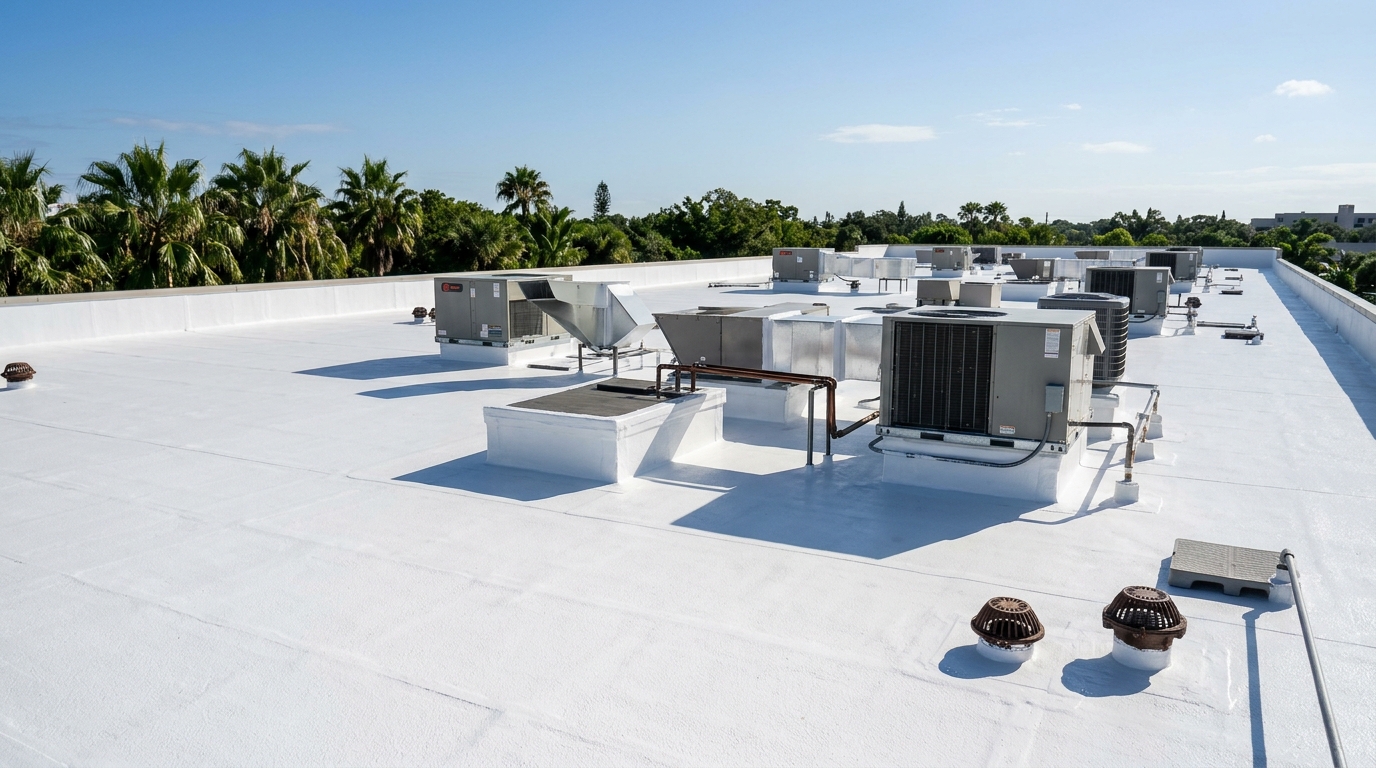
Low-Slope & Flat Roof Specialists Across Hillsborough County

Flat Roof Repair and Leak Detection in Tampa, FL

Flat roofs don't shed water the way sloped roofs do. When a seam pulls open, a drain clogs, or water sits after an afternoon storm, that moisture has nowhere to run. It sits directly on the membrane, works its way into the insulation boards underneath, rots the decking, and eventually drips onto your ceiling or your warehouse floor.

At Roof Work, we have spent the last 34 years repairing low-slope and flat roofs across Hillsborough County. We work on residential Florida rooms and covered lanais just as often as commercial retail buildings, industrial warehouses, and apartment complexes. Our first move is never to push a $20,000 replacement. If the structure is sound and the insulation under the surface isn't soaked, an isolated leak can almost always be fixed with a clean, code-compliant repair.

Moisture Scan Diagnostics • TPO • Mod-Bit • Silicone Restorations
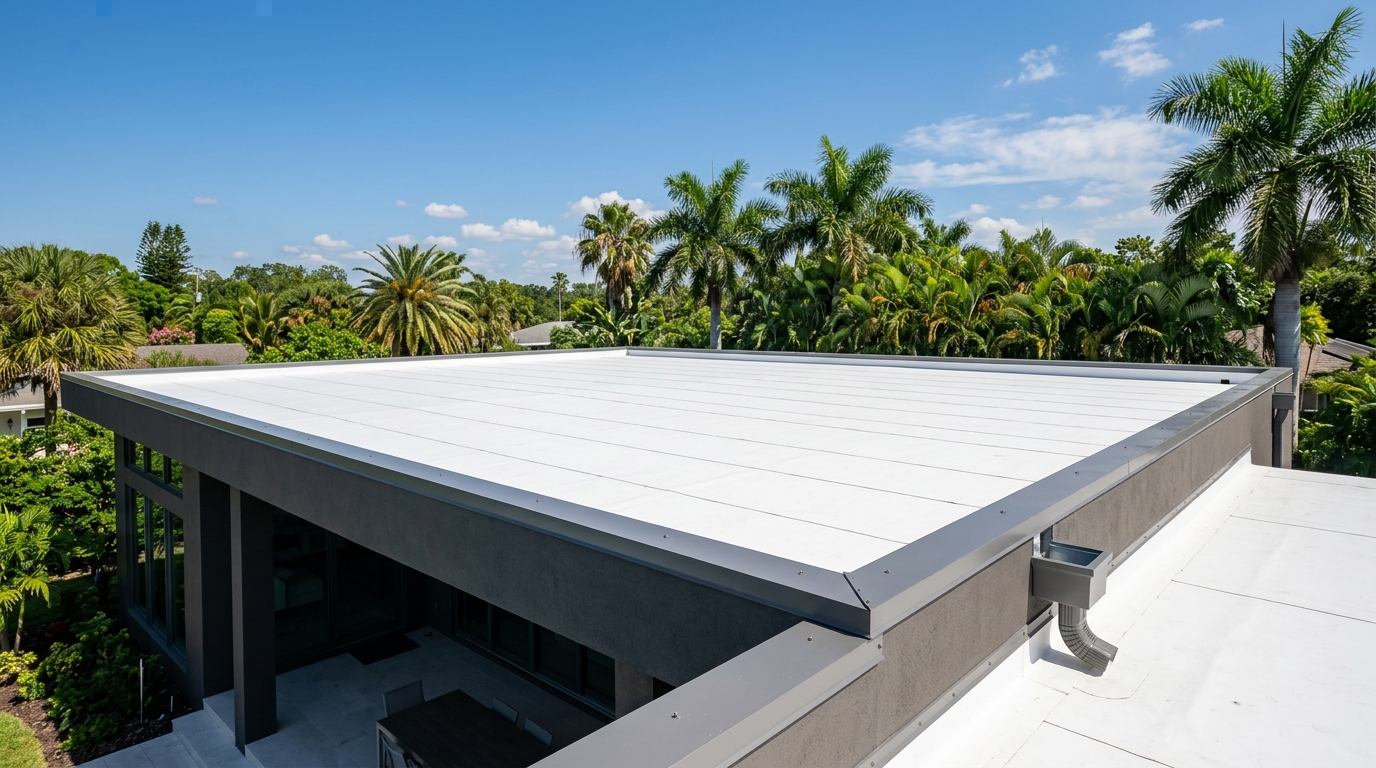
Low-slope flat roof installation and repair in Tampa Florida
Commercial & Residential Low-Slope TPO, Modified Bitumen, Silicone & Lanai Transitions
GAF Certified Weather Stopper Roofing Contractor
CertainTeed ShingleMaster
BBB Accredited Business
Hydro-Stop Approved Contractor
Greater Temple Terrace Chamber of Commerce

DIAGNOSTIC DECISION MATRIX

Flat Roof Coating vs. Full Replacement: Costs and What Your Roof Needs

Before deciding between a repair, a restoration coating, or a complete tear-off, you need to know what is happening under the top sheet. When we inspect a low-slope roof, we check the actual insulation boards underneath so you don't waste money coating a system that is already rotting from within, or spend $20,000 on a tear-off you don't actually need:

Cost: 40% to 50% of Replacement

When a Targeted Repair or Silicone Restoration Is the Right Move

If electronic moisture scanning confirms your insulation boards are dry and the underlying wood or steel deck is solid, you do not need to tear the roof off. In these cases, we repair seams, flashings, and curb corners, then apply a commercial high-solids silicone coating directly over the cleaned membrane.

  • Seamless & Watertight: Creates a single monolithic layer immune to standing water.
  • Major Cost Savings: Roughly 40% to 50% of the cost of a full roof replacement.
  • Zero Business Disruption: Eliminates loud tear-off noise, dumpster permits, and landfill waste.
  • 10- to 20-Year Warranties: High-solids formulations backed by manufacturer guarantees.
  • 100% Tax Deductible: Under IRS Section 179 rules, qualifies as an operating expense in the year completed.
Structural Requirement

When a Full Tear-Off and Replacement Is Structurally Mandatory

If core cuts reveal water has saturated the underlying polyisocyanurate insulation across large sections, a surface coating will fail. Soaked insulation loses its R-value, traps heat, and causes coatings to bubble and peel within months.

  • Saturated Insulation Core: Wet polyiso must be stripped to prevent deck rot and mold.
  • Bare Wood/Steel Deck Check: Complete structural inspection and replacement of soft decking.
  • Code-Mandated Tapered Slope: Adds tapered insulation crickets to satisfy Florida’s 48-hour drainage rule.
  • New Single-Ply or Mod-Bit System: Clean white heat-welded TPO or multi-ply SBS rubberized assembly.
  • Itemized Upfront Pricing: Line-item contract including clear flat per-sheet wood rates.

RESIDENTIAL LOW-SLOPE VULNERABILITY

Fixing Leaks Where Lanai, Porch, and Florida Room Flat Roofs Meet Shingles

In Tampa neighborhoods like Brandon, Riverview, and South Tampa, the number-one source of interior leaks is the transition where a flat rear addition (a lanai, covered patio, or sunroom) meets the home’s main sloped shingle or tile roof.

Why Standard Handyman Patches Fail Here:

Most handymen and low-bid roofers try to stop these leaks by smearing black roofing cement along the seam where the two rooflines meet. In Florida's sun, that tar dries out, cracks, and pulls away within 90 days. When afternoon storms hit, water rushing down the main sloped roof hits that flat transition, backs up behind the dried tar, and wicks sideways into the fascia, soffits, and interior drywall.

How We Build a Watertight Transition (From Bare Wood Up):

1

Strip to Bare Decking

We remove the bottom 2 to 3 rows of shingles or tiles along the slope to expose the raw wood deck and inspect for rotted sub-fascia.

2

Install Secondary Water Barrier

We apply a heavy-duty ASTM D1970 self-adhering peel-and-stick membrane, running it at least 18 inches up the sloped roof deck and 18 inches out over the flat addition deck to create a seamless, waterproof seal.

3

Set Custom Metal Flashing

We fabricate and fasten a custom-bent 26-gauge metal transition flashing across the seam, providing a smooth, durable bridge between the two roof angles.

4

Tie the Systems Together

We fuse the low-slope modified bitumen cap sheet directly over the metal flange, then re-nail the primary roof shingles above it using a 6-nail pattern. Water flowing down your roof glides right over the transition without finding an edge to enter.

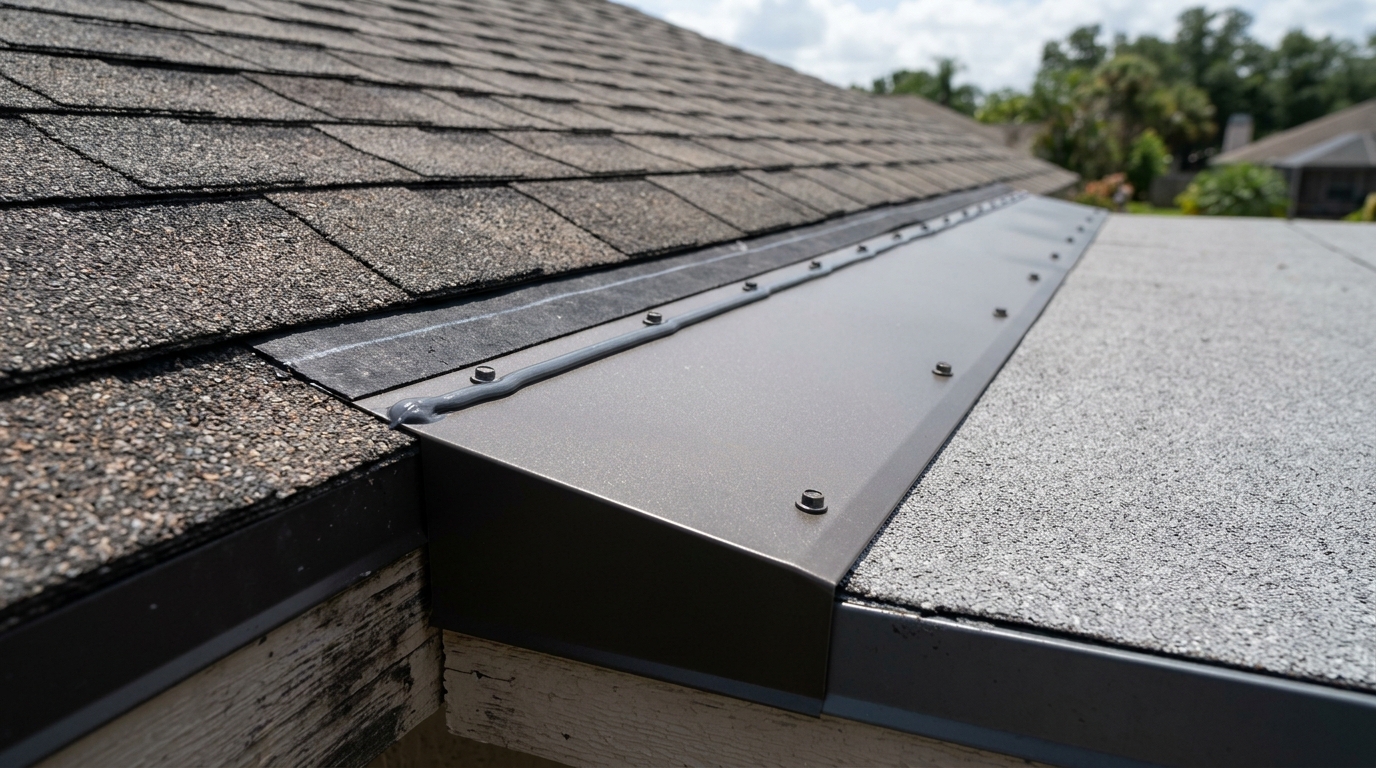
Watertight metal transition flashing installed between flat lanai roof and sloped shingle roof

Precision Flashing Rebuild

Custom 26-gauge Galvalume transition metal layered over ASTM D1970 secondary water membrane ensures lifetime protection against wind-driven torrential downpours.

STRUCTURAL FAILURE MECHANISMS

Common Flat Roof Problems That Cause Leaks on Tampa Properties

Flat roofs in Tampa fail for very specific mechanical reasons. Between 95°F summer heat, sudden tropical downpours, and daily thermal shock, low-slope membranes face extreme environmental stress. If your flat roof is leaking, the water is almost certainly entering through one of these five structural breakdown points:

Ponding Water & Deck Sagging (Violating Florida's 48-Hour Code)

Under Florida Building Code Section 1507.10, flat roofs must drain standing water within 48 hours of rainfall. When water sits continuously in low areas, it creates a magnifying lens under the Florida sun, breaking down asphalt binders and weakening single-ply membranes. The heavy dead-weight causes the wood or metal decking underneath to deflect downward, creating an even deeper bowl that holds water permanently until it rots through the roof deck.

Separated Seams & Thermal Lap Shear

On hot summer days, dark roof surfaces reach 160°F to 170°F before an afternoon thunderstorm dumps cold rain, dropping membrane temperatures by 40°F in under 15 minutes. This rapid thermal shock causes sheets to expand and contract violently. On TPO and modified bitumen roofs with aged adhesives, this movement shears open the factory laps, creating hairline gaps where wind-driven rain blows directly into your insulation.

Trapped Moisture Blisters & Vapor Pockets

When a minor leak allows rainwater to soak into the polyisocyanurate insulation beneath the membrane, the water has nowhere to escape. The next morning, high attic and sun temperatures vaporize that trapped moisture into expanding steam. This internal pressure forces the membrane upward into soft, hollow blisters that easily puncture under foot traffic, letting gallons of trapped water flood the building.

Parapet Wall Cracks & Coping Metal Breaches

High winds blowing over building edges create intense uplift pressure along exterior perimeter walls. If your base flashings are poorly fastened or the masonry counter-flashing mastic has dried out and shrunk, wind pulls the membrane away from the vertical block wall. Rain blowing against your building exterior then runs down behind the membrane, bypassing the roof completely and soaking interior drywall.

Rooftop Unit (RTU) Curb & Pipe Penetration Leaks

Commercial air conditioning units run constantly in Tampa's heat. The continuous mechanical vibration from heavy compressors shakes curb flashings loose, cracks dried-out pitch pans, and tears the seal around electrical conduits and refrigerant lines. Water enters around the equipment legs and runs down structural beams, creating difficult-to-trace leaks across your ceiling.

LOCAL LOW-SLOPE EXPERIENCE

Why Hillsborough County Property Owners Trust Roof Works

Over 34 years in Tampa Bay, we have diagnosed, repaired, and restored low-slope roofs across industrial parks, residential developments, and commercial strips. We treat your property with complete integrity: we never push costly replacements when a targeted repair or silicone restoration is the right structural move.

Non-Destructive Moisture Scanning

We test underlying polyiso insulation using infrared thermal imaging and electronic impedance meters before recommending any scope, ensuring you never pay to coat wet insulation.

State Certified License #

Fully certified Florida roofing contractor with full statutory Workers’ Compensation and a $5,000,000 Commercial General Liability policy protecting your facility.

Code-Compliant Tapered Drainage

Every restoration and reroof is engineered with positive slopes and overflow scuppers to satisfy Florida Building Code Section 1507.10 48-hour drainage requirements.

"Roof Works inspected our flat warehouse roof after three other contractors insisted on an immediate $45,000 reroof. They proved the deck and insulation were bone dry, restored the seams, and coated it with silicone for less than half the quote. Not a drop of water since."
Facilities Manager, 50th Street Industrial Park, Tampa
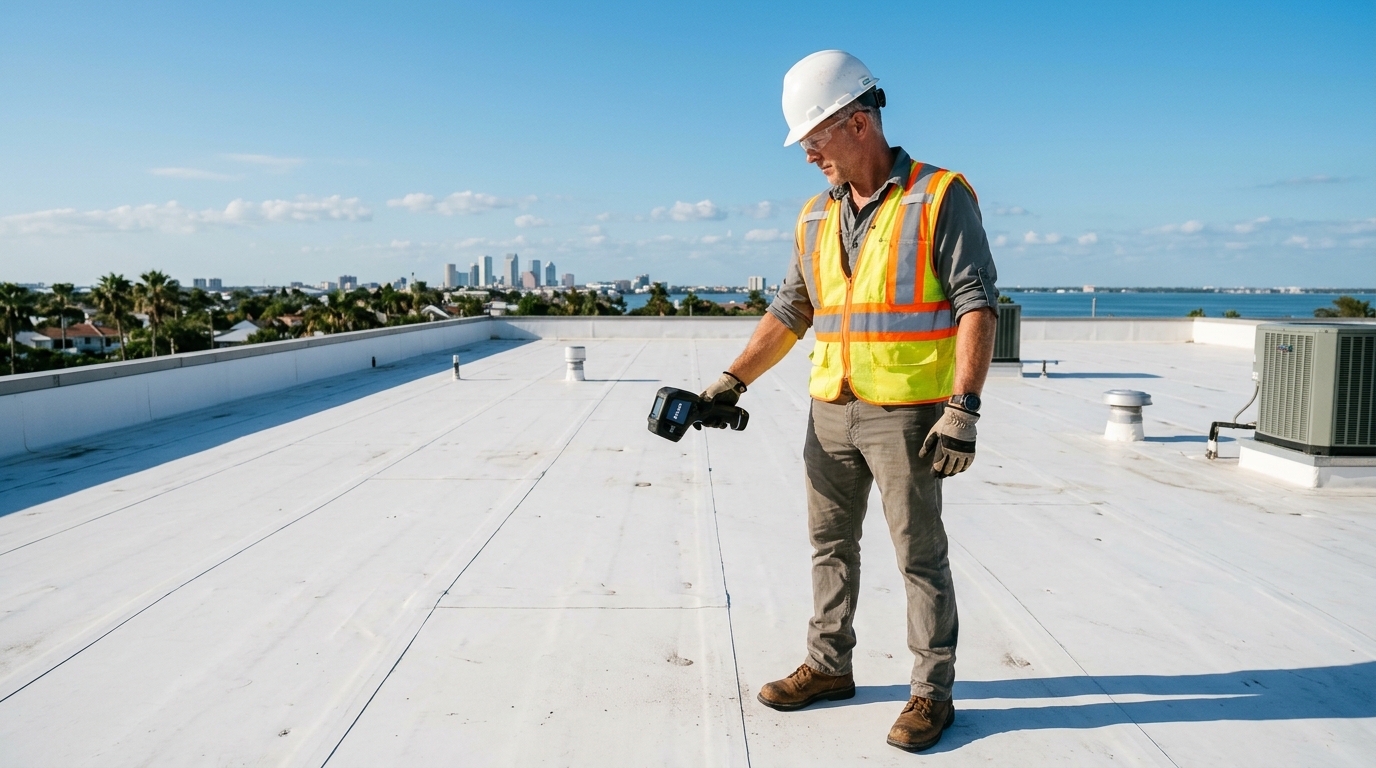
Licensed Florida roofing contractor inspecting low-slope roof in Tampa
Florida State Certified

Our Hillsborough County Track Record

34+ Years in Business Serving Tampa Bay since 1990
45,00+ Completed Projects Commercial & residential roofs
4.9
4.9-Star Local Rating Hundreds of verified local reviews

MANUFACTURER-APPROVED METHODS

How We Repair Low-Slope Roofs: TPO Heat-Welds, Modified Bitumen & Silicone

A flat roof cannot be patched with whatever leftover mastic is sitting in the back of a truck. Using black asphalt cement on a white single-ply membrane or silicone caulk on a modified bitumen seam will fail within months under Florida’s heat. At Roof Work, every repair matches the original material using manufacturer-approved methods:

TPO and PVC Single-Ply Membrane Welds

Black rubber (EPDM) roofs struggle in Tampa because dark surfaces bake past 170°F, melting seam adhesives. White TPO and PVC handle the sun, but fixing them requires more than a simple patch. Over time, these membranes develop a thin oxidized film. We deep-clean that surface with specialized membrane solvent, scrub off the oxidized layer, and use commercial hot-air welders running between 800°F and 1,000°F to heat-weld a new patch directly to the deck. This re-fuses the material at a molecular level so the seam becomes one solid piece again, never relying on caulk or roofing tar.

Modified Bitumen Multi-Ply Rebuilds

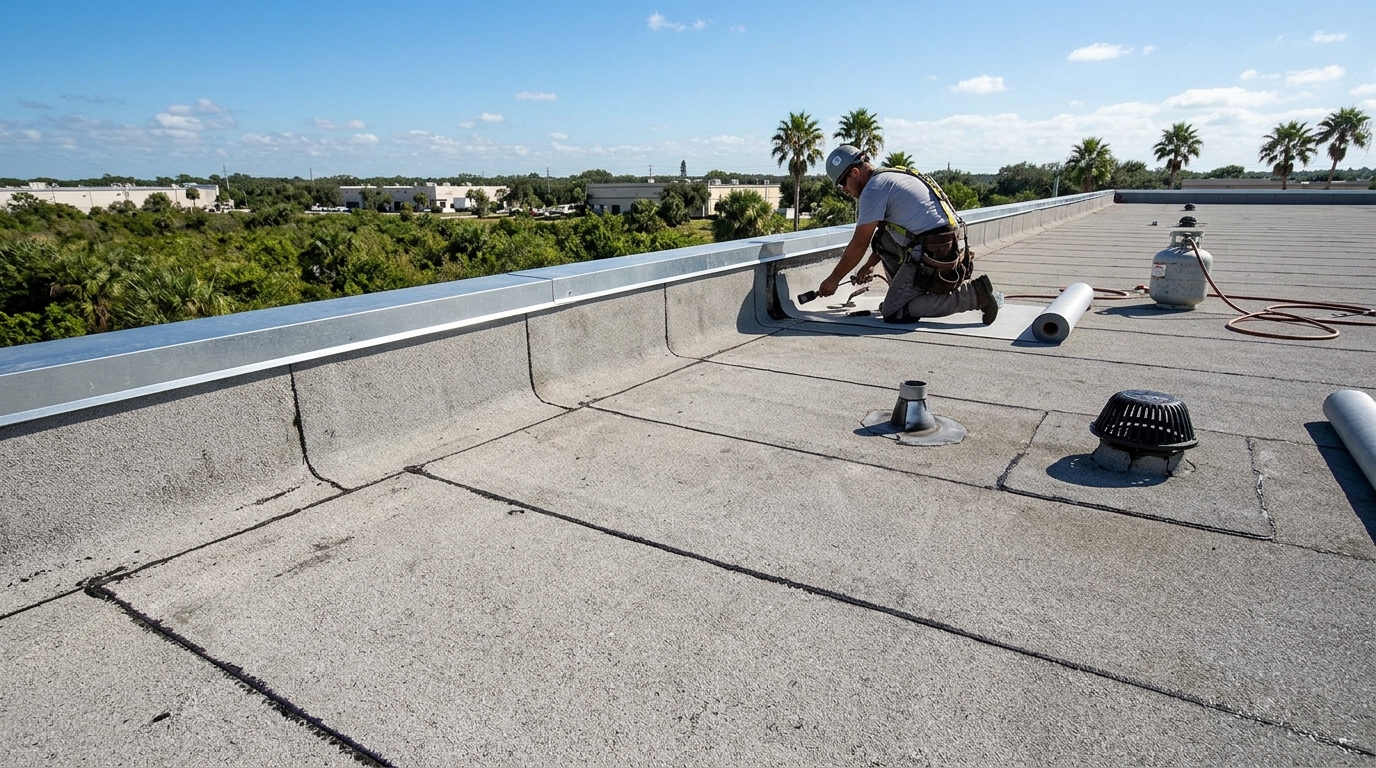
When an older modified bitumen roof cracks or blisters, slapping tar over the top only traps water underneath. We cut out the damaged, wet layers down to clean, dry decking, prime the wood or concrete substrate, and install a heavy-duty, cold-applied SBS rubber-modified base sheet. We then bond a mineral-surfaced cap sheet over the repair area with commercial elastomeric flashing cement and embed matching ceramic granules to shield the patch from daily UV exposure.

High-Solids Silicone Restorations

For sound metal or low-slope membranes that have developed pinholes around old fasteners or seams, a liquid-applied restoration seals the entire surface without a full tear-off. We reinforce all mechanical seams, scuppers, and AC curb transitions with three courses of heavy polyester fabric embedded in flashing mastic. We then roll or spray a seamless, 100% high-solids silicone coating across the area. Unlike standard acrylic coatings that break down under water, silicone is completely unaffected by standing rain.

FIELD CASE STUDIES

Recent Low-Slope Projects Completed Across Tampa Bay

Real solutions delivering watertight performance for commercial facilities and residential lanai additions across Hillsborough County:

Commercial high-solids silicone roof restoration in South Tampa FL South Tampa, FL
Commercial Silicone Restoration

4,500 Sq Ft Retail Building Membrane Restoration

The Property:

Commercial retail building along South MacDill Ave facing chronic ponding water leaks around rooftop AC compressor curbs.

Our Solution:

Electronic moisture scanning confirmed the polyiso insulation core was dry. We reinforced all curbs and seams with polyester fabric and sprayed a 100% high-solids white silicone coating.

The Outcome:

Eliminated all leaks, lowered building cooling load by 24%, saved the property owner $26,000 compared to a tear-off, and qualified for 100% Section 179 tax deduction.
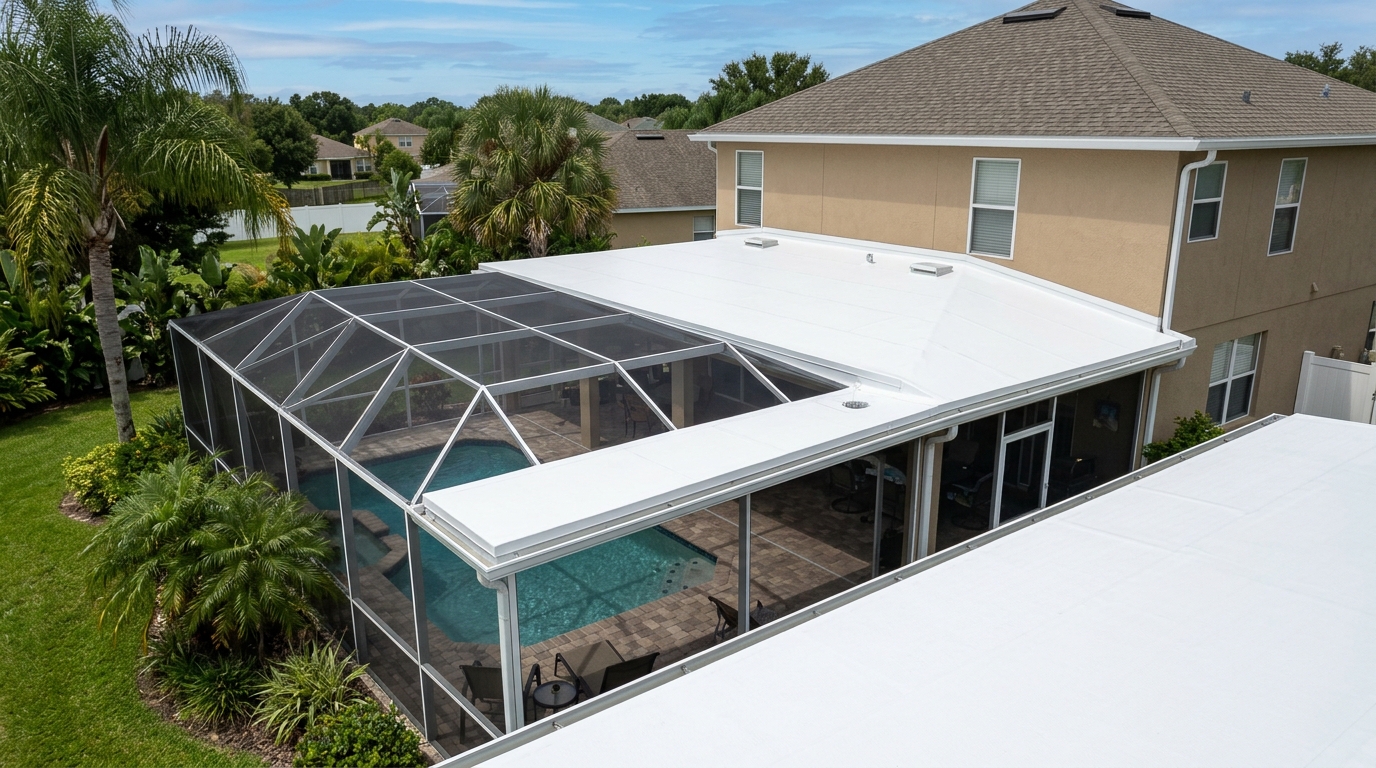
Residential lanai flat roof TPO rebuild in Brandon FL Brandon, FL
Lanai Shingle Transition Rebuild

Residential Pool Lanai Low-Slope Rebuild

The Property:

Single-family home in Brandon experiencing repeated interior drywall water damage where an enclosed pool lanai met the main 6:12 shingle roof.

Our Solution:

Stripped 3 courses of shingles, replaced 2 rotted fascia boards, applied ASTM D1970 peel-and-stick membrane 18 inches past the joint, and installed custom 26-gauge flashing with a white TPO cap sheet.

The Outcome:

Water now glides cleanly over the seam directly into perimeter gutters with zero water backup, passing full county building inspection.

Multi-ply modified bitumen commercial roof replacement in Riverview FL Riverview, FL
Multi-Ply Modified Bitumen

Commercial Flex-Space Parapet & Deck Rebuild

The Property:

Riverview commercial office facility where wind shear had separated aged perimeter parapet flashing, allowing rain to run behind exterior walls.

Our Solution:

Removed compromised perimeter flashing, installed tapered insulation crickets to eliminate standing water bowls, and bonded a 2-ply SBS granulated cap system with heavy-gauge coping metal.

The Outcome:

Achieved full 48-hour drainage compliance under Florida Code 1507.10, backed by a 20-year commercial manufacturer warranty.

LOCAL HILLSBOROUGH COVERAGE

Hillsborough County Communities We Serve

Our local crews provide prompt dispatch and diagnostic inspections across all Tampa Bay neighborhoods:

LOW-SLOPE CLARITY

Frequently Asked Questions

Straightforward answers to the most common questions Tampa property owners ask about flat roofs:

Yes, provided the underlying rigid insulation boards remain dry and the structural decking has not rotted. If moisture scans reveal the leak is isolated to an open lap seam, a dropped-tool puncture, or loose wall flashing, a code-compliant mechanical patch permanently restores water-tightness without the expense of a reroof.

Standing water is caused by structural roof sag, inadequate initial slope design, or drainage scuppers installed higher than the roof deck. We correct this by installing tapered polyisocyanurate insulation crickets that build a positive 1/4-inch per foot slope toward your drainage scuppers, ensuring water drains off within the Florida Building Code's 48-hour limit.

Standard asphalt roof cement (black mastic) dries out, shrinks, and cracks within a few months under Florida's intense UV radiation, especially over single-ply membranes like TPO. A permanent repair requires heat-welded membrane patches or UV-stable elastomeric silicone systems that expand and contract with summer temperature swings.

White thermoplastic polyolefin (TPO) and multi-ply SBS modified bitumen are the top choices for Tampa. White TPO reflects solar UV radiation to reduce cooling costs and chiller strain, while SBS modified bitumen provides superior puncture resistance for roofs subject to heavy foot traffic, falling oak branches, or routine AC maintenance.

Yes. When water pools at the transition point where a flat lanai roof joins your primary shingle roof, water wicks horizontally under the shingles, rotting the main sub-fascia, rafter tails, and interior wall framing of your primary living area. We rebuild that joint with bare-wood tear-offs, peel-and-stick barriers, and custom transition metal so water glides over the seam without backing up.

STOP MOISTURE INTRUSION • HONEST EVALUATIONS

Stop Low-Slope Water Intrusion Before Substrates Rot

If you are dealing with an active flat roof leak, recurring ponding water, or an insurance question on an older membrane, get an honest evaluation from a licensed local roofer who knows low-slope systems inside and out. We verify the insulation condition first, engineer proper drainage slopes, and give you straightforward, line-item pricing with zero replacement pressure.

Non-Destructive Moisture Scanning & Deck Check
Florida 48-Hour Drainage Slope Verification
Written Upfront Scope • Zero Replacement Pressure
Direct Phone Line, Commercial & Residential Desk (813) 845-8300

Speak directly with an experienced flat roofing specialist • Fast dispatch across Tampa Bay.

Request Flat Roof Assessment

Includes moisture testing, seam check, drainage review, and a written line-item repair quote.

We respect your privacy. No spam or aggressive sales tactics.