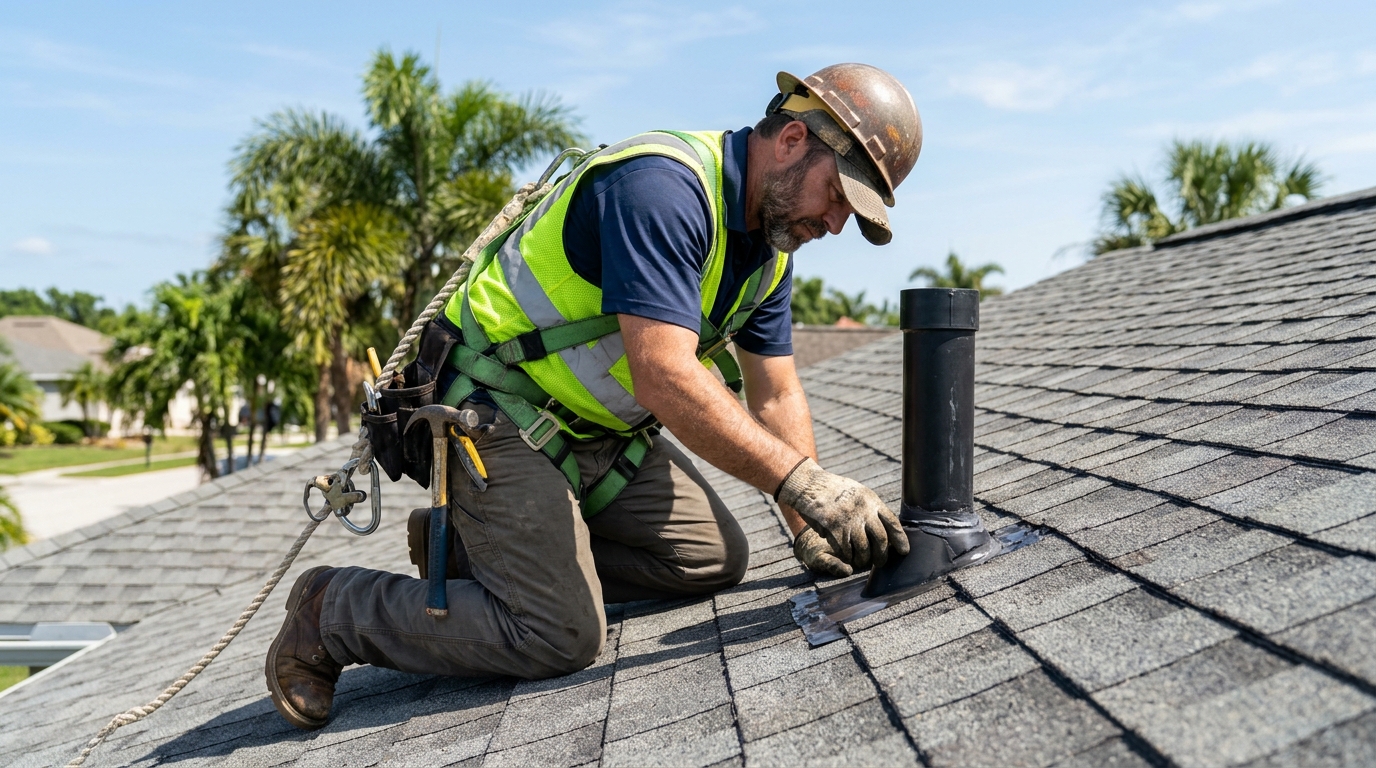
A leaking roof is not always fixed by replacing a shingle or applying roofing cement. Water can enter through damaged flashing, a failed pipe boot, cracked tiles, loose metal-roof fasteners, or deteriorated materials beneath the visible roof covering. It can then travel along the roof deck before appearing as a ceiling stain somewhere else.
If your roof is leaking in Tampa, FL, the first priority is to protect your home without putting yourself at risk. Next, identify the likely cause and determine whether the damage calls for a localized repair, emergency attention, or a broader roof assessment.
This guide explains what you can safely do now, how common roof leaks are repaired, and when to contact a roofing contractor.
What to Do When Your Roof Is Leaking
If water is entering your home, take these steps before worrying about exterior repair:
- Keep people away from the affected area: A sagging or bulging drywall ceiling may collapse under the weight of trapped water. Do not press on it or puncture it carelessly.
- Protect belongings where safe: Move furniture and electronics away from the drip path. Place a sturdy bucket or plastic container under dripping water only if the surrounding ceiling and flooring are structurally sound.
- Watch for electrical hazards: Avoid touching wet light fixtures, ceiling fans, wall switches, or outlets. If water is entering near electrical circuits, shut off power to that room at your main breaker panel.
- Record the damage: Take date-stamped photos and videos from a safe location. Note when the leak began, whether it worsened during wind-driven rain, and which rooms are affected.
- Arrange a professional repair assessment: If water is actively pouring in, roofing materials are missing, or the wood deck is exposed, contact a licensed contractor immediately.
For active leaks or exposed roof areas, Roof Work's emergency roof repair service provides fast dispatch and dry-in tarping across Hillsborough County.
Safety caution: Do not climb onto a wet or storm-damaged roof to apply a patch. Wet shingles, dusty tiles, and slick metal panels create severe slip-and-fall hazards. A fall from a roof can turn a routine repair into a life-threatening injury.
How to Find the Source of a Roof Leak Without Climbing
The place where water drips through your ceiling is rarely directly below the exterior roof opening. Water typically penetrates an exterior joint, rolls along a sloped plywood deck seam or angled wood truss, and eventually drips through the lowest ceiling drywall seam.
Look for Visible Roof Damage From the Ground
Using a pair of binoculars from your yard or across the street, check for obvious warning signs:
- Missing, lifted, or curled asphalt shingles after strong gusts.
- Cracked, broken, or visibly displaced concrete or clay roof tiles.
- Visibly dented or loose metal panels and raised fastener heads.
- Loose, separated, or rusted flashing around chimney sidewalls, dormers, or parapet walls.
- Debris accumulation damming valleys, scupper outlets, or gutter downspouts.
- Fallen oak tree limbs or wind-blown objects resting on the roof surface.
Check for Safe Indoor Clues
If your attic has safe, permanent flooring and good lighting, enter carefully with a flashlight. Look for dark water trails along roof rafters, rusted nail points protruding through the plywood decking, or wet insulation batts. Never step off wooden joists onto ceiling drywall, touch wet wiring, or enter an attic if you suspect structural damage.
Also determine whether the moisture coincides with rainfall. If water drips on a sunny, cloudless afternoon, the culprit is almost certainly an air conditioning condensate line overflow or plumbing leak rather than the roof.
When the source remains elusive, avoid paying for repeated cosmetic patches without a diagnosis. Have an experienced technician inspect the assembly through our comprehensive roof repair service.
Common Roof Leak Causes and the Repair Each One Needs
Permanent exterior leak repairs require addressing the underlying waterproofing system, not merely smearing caulking over a surface crack. Here is how professional roofers fix each primary failure:
1. Missing or Damaged Shingles
The Cause: High winds break the thermal sealant bond, tearing shingle tabs along the nail line and leaving the underlying felt or deck bare to rain.
The Exterior Repair: A roofing mechanic gently breaks the seal on adjacent overlapping shingles using a flat pry bar. The nails holding the damaged shingle are removed. A new matching architectural shingle is slipped into place, fastened with four to six galvanized roofing nails in the approved nailing strip, and resealed with hand-applied asphalt roofing cement.
If widespread shingles tore away during severe weather, explore our storm damage roof repair service.
2. Leaking Roof Flashing Around Chimneys and Walls
The Cause: Step flashing and counterflashing along sidewalls and chimneys expand and contract during heat cycles. Rusted metal, detached mortar joints, or dried silicone caulk allow wind-driven rain behind the flashing.
The Exterior Repair: Mechanics remove surrounding shingles, inspect the wood sidewall, and replace corroded L-shaped step flashing tins with fresh corrosion-resistant aluminum or copper. Counterflashing is ground into masonry mortar joints, secured with lead wedges, and sealed with elastomeric polyurethane sealant.
3. Leaking Plumbing Pipe Boot or Roof Vent
The Cause: Standard neoprene rubber collars on plumbing vent boots dry-rot and split under intense Florida UV rays within 6 to 10 years, creating an open ring for water to pour straight down plumbing walls.
The Exterior Repair: Smearing caulk around a cracked rubber boot is a temporary band-aid that fails within months. A technician removes surrounding shingles, pulls the old pipe collar, installs a new heavy-duty silicone or lead pipe flashing assembly, re-shingles the surrounding area, and seals nail heads.
4. A Tile Roof Leaking Despite Intact-Looking Tiles
The Cause: While surface tiles remain intact, the organic felt underlayment beneath them has degraded from decades of trapped attic heat.
The Exterior Repair: Technicians must remove the tiles in the leak zone, inspect and repair the wood deck, install fresh dual-layer high-temperature modified bitumen peel-and-stick underlayment, and reinstall the tiles with two-part polyurethane foam adhesive. For dedicated assistance, explore Roof Work's tile roofing service.
5. A Metal Roof Leaking at Screws or Seams
The Cause: On exposed-fastener metal roofs, neoprene screw washers dry-rot, and thermal movement backs screws out. On standing seam roofs, end-lap sealant may have dried out.
The Exterior Repair: Technicians remove backed-out fasteners, inspect the screw hole for wood engagement, and install oversized fasteners with fresh UV-resistant EPDM washers. For standing seam roofs, interlocking seam caps or butyl tape transitions are renewed. Learn more on our metal roofing service page.
6. Roof Valleys, Edges, and Drainage Problems
The Cause: Valleys channel massive volumes of storm runoff. Corroded valley metal, nails driven too close to valley centers, or piles of oak leaves damming water force rain beneath shingles.
The Exterior Repair: Mechanics remove shingles on both adjoining slopes, replace damaged valley metal, lay continuous ice-and-water barrier underlayment, and re-install shingles with approved closed-cut or open-valley methods.
How to Temporarily Protect Your Home Until the Roof Is Repaired
Temporary emergency protection limits interior drywall and flooring ruin while you await scheduled contractor repairs:
- Move furniture, rugs, and valuables completely out of the leak area.
- Set up buckets lined with towels to reduce splashing and noise.
- If ceiling drywall is heavily sagging with trapped water, keep family members clear of the area.
- Arrange for a licensed roofing crew to install heavy-duty reinforced tarps secured with 2x4 wooden furring strips. A properly nailed tarp withstands Florida winds without tearing off or damaging surrounding shingles.
Can Roofing Cement or Sealant Stop a Roof Leak?
Roofing cement (plastic roof mastic) has its place in roofing, but it is not a cure-all. In fact, relying solely on roofing cement frequently causes more harm than good:
- Trapping moisture: Smearing thick mastic over a wet leak traps water inside the wood decking, accelerating plywood rot and mold growth.
- Short-lived solution: Standard asphalt cements dry out, shrink, and crack within 6 to 12 months under direct Florida sunlight.
- Masking the root problem: Tar patches hide the defect, making it much more difficult for a professional mechanic to find the genuine failure point later.
Always insist that your contractor replace failed components (flashings, boots, rotted wood) rather than simply applying a layer of roofing cement over existing defects.
Roof Leak Repair or Replacement: Which Do You Need?
A roof leak does not automatically mean you need a brand new roof. Use this decision framework to evaluate your options:
| What the Assessment Finds | Appropriate Next Step |
|---|---|
| One localized defect on an otherwise pliable, sound roof | Perform a surgical, targeted exterior roof repair |
| Missing or torn shingles after strong wind gusts | Replace missing shingles and check adjacent fasteners |
| Repeated leaks appearing in multiple living spaces | Investigate systemic underlayment wear and decking condition |
| Widespread shingle brittleness, curling, and heavy granule loss | Compare cumulative repair expenses with complete replacement |
| An older roof (18+ years) facing insurance renewal cancellation | Assess physical condition and evaluate code-compliant replacement |
| A roof that looks intact from outside but continues leaking | Diagnose concealed flashing defects or HVAC condensation lines |
When an aging roof reaches the end of its reliable service life, explore Roof Work's full roof replacement services.
When to Call an Emergency Roofer in Tampa, FL
Certain roofing failures require immediate same-day dispatch:
- Water is actively pouring through ceilings near electrical panels or light fixtures.
- Hurricane winds or fallen tree limbs have ripped open roof decking, exposing living spaces to open sky.
- Ceiling drywall is noticeably bulging or sagging under standing water.
- Water intrusion is spreading across multiple rooms during an active subtropical rainstorm.
In these urgent situations, call Roof Work at (813) 845-8300 for emergency dispatch, structural stabilization, and code-compliant dry-in tarping.
What to Ask Before Approving a Roof Leak Repair
Before signing a repair contract, ensure the contractor answers these critical questions:
- Where is the exact exterior water entry point? Require photos showing the precise failed component, not just the ceiling mark.
- What specific materials will be replaced? Confirm whether new step flashing, pipe boots, and underlayment are included.
- Is this a permanent surgical repair or a temporary patch? Make sure the contract explicitly defines the scope.
- How are rotted plywood decking sheets handled? Ask for the per-sheet replacement rate in writing.
- What workmanship warranty covers the repair? Ensure you receive a written guarantee against leaks in the repaired area.
For complete guidelines on screening roofing companies, read our consumer guide on How to Choose a Roofing Contractor in Florida.
Frequently Asked Questions About Fixing Roof Leaks
How do I fix a leaking roof from the outside?
Permanent exterior repairs require isolating the specific failed component (such as a split pipe boot, rusted step flashing, or missing shingles), removing the surrounding materials down to the deck, installing code-compliant secondary water barriers, and fastening new matching materials. Temporary patches with roofing cement should only be used as emergency stopgaps.
How can I stop an active roof leak during heavy rain?
Focus exclusively on indoor containment. Relocate furniture, catch water in buckets lined with rags to prevent splashing, and shut off power if water is near wiring. Never climb onto a wet, slippery roof during a storm. Contact an emergency roofer to install professional storm tarping once lightning has passed.
Why is my roof leaking when no damage is visible from outside?
Water frequently enters through microscopic gaps in sidewall flashing, split rubber plumbing boots, or dried underlayment beneath intact tiles. Because water rolls horizontally along sloped roof framing, the leak source is often several feet upstream from where the stain appears indoors.
Does a roof leak mean I need a complete replacement?
No. Most roof leaks stem from isolated flashing or penetration failures on roofs that otherwise have years of serviceable life remaining. Replacement is only necessary when shingles are brittle across all slopes, underlayment has failed system-wide, or structural decking is extensively rotted.
How much does professional roof leak repair cost in Tampa?
Minor repairs such as replacing a plumbing vent pipe boot or re-nailing shingle clusters typically range from $350 to $750. More extensive repairs involving multi-layered chimney flashing or tile underlayment resets range from $850 to $1,800. Always demand an itemized quote before approving work.
Get the Roof Leak Assessed Before Damage Spreads
A missing shingle, failed flashing joint, deteriorated pipe boot, damaged tile underlayment, and leaking metal-roof fastener can produce similar indoor symptoms, but each requires a different repair method.
If water is entering your home, protect the affected area, document what you can safely see, and avoid risky DIY work on the roof. Then arrange an assessment that identifies the genuine source and delivers a lasting exterior solution.
Need help fixing a leaking roof? Contact Roof Work to discuss your leak and request a fast diagnostic assessment, or call our Hillsborough County team at (813) 845-8300.