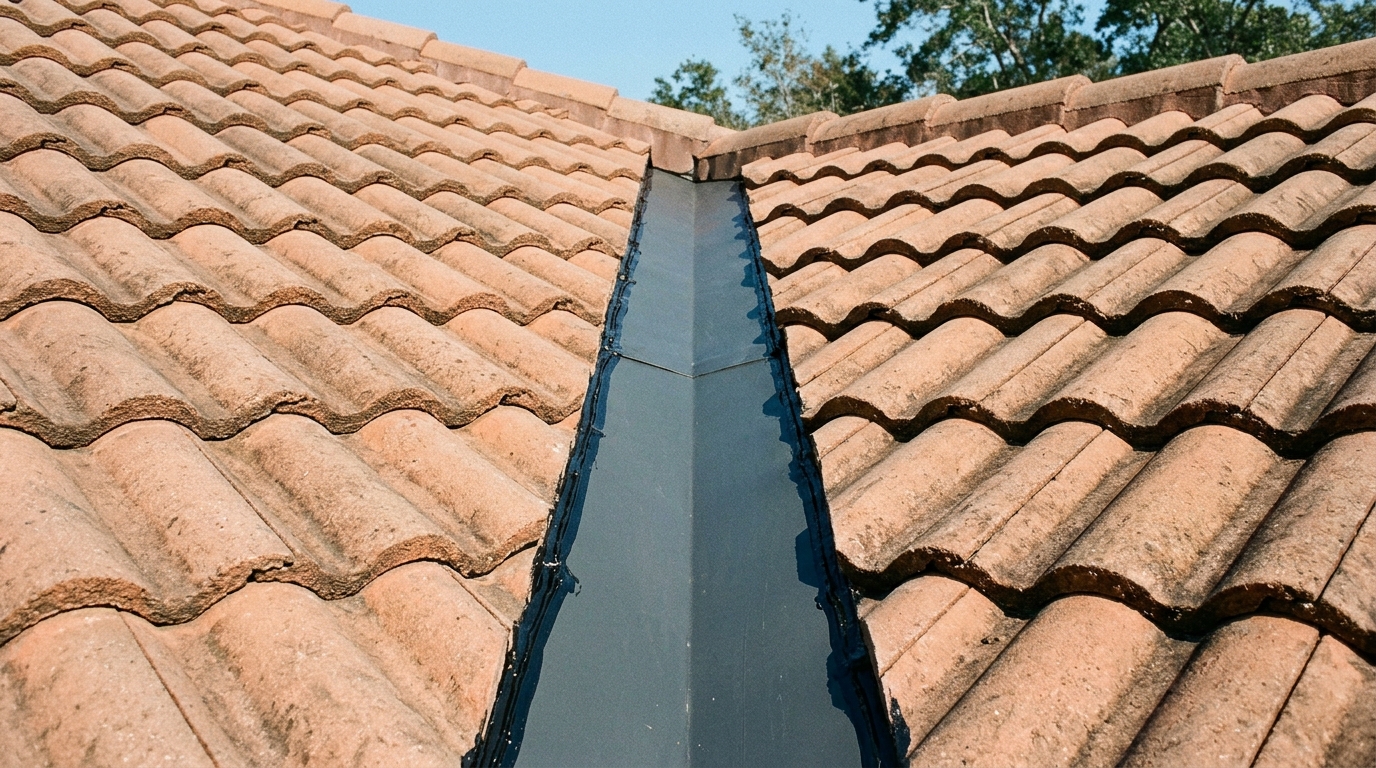
A tile roof can remain on a Florida home for decades, but the tiles are only one part of the roofing system. The underlayment beneath them, the flashing around roof transitions, and the way water drains off the roof all affect how long the assembly protects your home.
This distinction matters in Tampa Bay. You might have a roof with tiles that look perfectly intact from the street, yet still develop ceiling stains because the underlayment has deteriorated or water is entering around a valley, vent, or other roof penetration.
The right response depends on what has failed. A few broken tiles may need localized repair. An aging underlayment beneath otherwise reusable tiles may justify a tile lift-and-reset project. Widespread damage or an unsuitable roof assembly may make full replacement the more practical option.
This guide explains realistic tile roof lifespan expectations in Florida, how concrete and clay tiles compare, what to inspect when a leak develops, and how to decide what work your roof actually needs.
How Long Does a Tile Roof Last in Florida?
There is no single lifespan that applies to every tile roof. The tile material, manufacturing quality, installation, roof design, weather exposure, and maintenance all affect durability.
As a broad planning guide, concrete tiles may last around 30 to 50 years or longer, while well-made clay tiles can last 50 to 75 years or longer. Some clay tiles remain serviceable beyond that. These are approximate ranges for the tile covering, not a promise that every component underneath will last equally long.
The underlayment often needs attention much earlier. Depending on the original material, installation details, roof conditions, and exposure, some Florida tile roofs need underlayment replacement after roughly 15 to 30 years. The actual condition of the assembly should determine the timing.
| Roof Component | Broad Lifespan Expectation | What Affects Its Condition? |
|---|---|---|
| Concrete roof tiles | Often 30 to 50 years or longer | Tile density, impact damage, fastening method, and direct sun exposure |
| Clay roof tiles | Often 50 to 75 years or longer | Kiln firing quality, brittleness, foot traffic, and physical impact |
| Underlayment beneath tiles | May need replacement after roughly 15 to 30 years | Membrane material, attic heat, moisture saturation, and flashing details |
| Flashing and valley components | Varies by metal gauge and installation | Corrosion, sealant oxidation, trapped debris, and thermal movement |
| Ridge and hip details | Varies by attachment and construction | Mortar cracking, mechanical screw corrosion, and foam bond adhesion |
Planning note: These ranges are for initial planning, not a mandatory expiration date. A hands-on roof inspection should establish whether the tiles, underlayment, flashing, and structural roof deck remain serviceable.
For a comparison across all residential roofing materials, read our comprehensive guide to how long a roof lasts in Florida.
Concrete vs. Clay Roof Tiles in Florida: Which Lasts Longer?
Concrete and clay tiles can both provide long service when correctly specified and installed. The choice should account for structural capacity, aesthetic preferences, and budget considerations:
Concrete Roof Tiles
Concrete tiles are formed from Portland cement, sand, water, and iron-oxide pigments. They are available in diverse profiles (Spanish S-curves, villa rolls, and flat slate-like shakes) and are widely used across Tampa suburban communities.
Key performance factors:
- Durability: Engineered for 30 to 50+ years of structural resistance against high winds.
- Weight considerations: Weigh between 900 and 1,200 pounds per square (100 sq ft). Roof framing must be engineered for heavy dead-loads.
- Finish weathering: Slurry-coated concrete tiles can experience surface efflorescence or fading over 15 to 20 years, whereas color-through concrete maintains color consistency throughout the tile body.
Clay Roof Tiles
Natural clay tiles (terracotta) are molded from natural earth and vitrified in kilns at temperatures exceeding 1,800 degrees Fahrenheit. They represent the hallmark aesthetic of Mediterranean, Spanish Mission, and coastal Florida architecture.
Key performance factors:
- Extreme longevity: Fired clay is virtually impervious to UV degradation and can last 50 to 75+ years.
- Permanent color: The rich earthy terracotta hue is baked into the clay matrix and never fades or oxidizes.
- Brittleness: Clay tiles are more brittle than concrete. Walking on them improperly will shatter the tile barrels instantly.
Explore Roof Work's specialized tile roofing services to evaluate concrete and clay options, or compare materials in our guide to metal vs. tile vs. shingle roofs in Florida.
Why Tile Roof Underlayment Can Fail Before the Tiles
The most critical concept for Florida tile roof owners to understand is that tiles act as a primary water-shedding armor, but they are not an airtight waterproof seal.
Rainwater, especially during wind-driven Tampa summer storms, naturally penetrates between tile overlaps, headlaps, and valley edges. The secondary water barrier underneath (the underlayment) channels this water safely down to the eaves and drip edge.
Historically, older tile roofs installed in the 1990s and early 2000s utilized traditional organic felt underlayment (ASTM D226 Type II #30 felt) or mineral-surfaced roll roofing. Under relentless Florida attic heat (frequently reaching 150 degrees Fahrenheit beneath tiles), organic felt dries out, curls, tears along nail penetrations, and becomes brittle within 15 to 20 years, even while the concrete or clay tiles on top remain in pristine condition.
What Is a Tile Lift-and-Reset?
A tile lift-and-reset (also called a tile relay) is an engineered re-roofing procedure that saves thousands of dollars by reusing your existing, undamaged tiles while replacing the failed waterproofing system beneath:
- Tile Removal and Staging: Technicians carefully remove ridge caps, field tiles, and valley cuts, palletizing and safely staging them on the property or roof ridge.
- Substrate Tear-off and Deck Inspection: The dried-out felt underlayment is stripped down to bare plywood. Rotted plywood decking, valley rafters, and rotted fascia boards are repaired.
- Re-Nailing Deck to Current Code: Roof sheathing is re-nailed with 8d ring-shank nails at 6-inch spacing to meet modern Florida hurricane uplift requirements.
- High-Temperature Self-Adhering Underlayment: Heavy-duty dual-layer modified bitumen peel-and-stick membrane (rated up to 250 degrees Fahrenheit) is installed directly to the wood deck, sealing around every nail.
- New Metal Flashings and Drip Edge: New heavy-gauge valley metals, eave closures, plumbing boots, and wall flashings are installed.
- Tile Reinstallation and Foam Adhesion: The original tiles are re-laid in precision alignment. Rather than driving nails through the new underlayment, tiles are fastened using high-performance two-part polyurethane foam adhesive.
Why Is Your Tile Roof Leaking if No Tiles Look Broken?
When water stains appear on your ceiling but every tile looks intact from the driveway, technicians investigate these hidden vulnerabilities:
- Underlayment Dry-Rot: Water entering under tile overlaps penetrates through cracked felt, running along rafters before dropping into insulation.
- Debris Damming in Valleys: Oak leaves and pine needles collect beneath tile cutouts in roof valleys, damming water and forcing it horizontally over the flashing edges.
- Cracked Plumbing Vent Collars: Lead or rubber pipe flashings degrade under intense solar heat, letting water seep around bathroom vents.
- Deteriorated Mortar on Hips and Ridges: Older mortar wash along hips and ridges cracks from thermal expansion, allowing rain to pour directly into the ridge channel.
- HVAC Condensation or Plumbing Leaks: Water stains often originate from cracked A/C drain pans or uninsulated attic ductwork rather than the roof covering.
If your roof is leaking, schedule a diagnostic roof repair inspection, or contact our team for emergency roof repair if rainwater is actively entering living spaces.
How to Tell Whether Your Tile Roof Needs Repair or Underlayment Replacement
Use this practical diagnostic matrix to determine the most cost-effective path:
| What You Notice | What It Could Indicate | Practical Next Step |
|---|---|---|
| One visibly broken, chipped, or displaced tile | Isolated foot traffic or falling branch impact | Arrange a targeted tile replacement and seal adjacent tiles |
| A leak below a valley, chimney, or sidewall | Flashing corrosion, debris dams, or failed corner seals | Inspect valley flashing and clear underlying drainage channels |
| Recurring leaks across multiple rooms on an 18+ year-old roof | Systemic underlayment failure and embrittlement | Evaluate a tile lift-and-reset with modern peel-and-stick underlayment |
| Widespread cracked or crumbling tiles across all slopes | Severe storm impact, poor quality concrete, or brittle clay | Compare cumulative repair costs with complete tile replacement |
| Soft or sagging roof decking felt underfoot | Long-term chronic moisture saturation and wood rot | Require immediate structural deck replacement before resetting tiles |
| Cracked mortar and loose ridge caps after tropical winds | Mortar breakdown or fastener pull-out along ridges | Reset ridge tiles with foam adhesive and mechanical clips |
| Water stains appearing after a named hurricane | Tile uplift, flashing displacement, or wind-driven rain penetration | Arrange an immediate storm damage inspection |
Tile Roof Maintenance in Florida: What Homeowners Should Do
- Never walk on your tile roof: Foot traffic is the single largest cause of tile fractures. Hire licensed professionals with tile-walking safety gear.
- Clear debris from valleys and gutters: Ensure water channels flow freely twice a year to prevent capillary backup.
- Inspect flashing boots every 3 years: Lead and rubber transitions degrade long before tiles reach their expected lifespan.
- Use gentle soft-washing for algae removal: Never blast tiles with high-pressure washers, which forces water beneath the headlaps and erodes concrete finishes.
- Maintain comprehensive documentation: Keep copies of permits, lift-and-reset invoices, and wind-mitigation inspection reports.
Tile Roof Component Lifespan Matrix
| Component | What Can Shorten Its Service Life? | What to Check During Inspection |
|---|---|---|
| Concrete Tiles | Tree impact, foot traffic, low-density mix, and thermal cycling | Hairline cracks, chipped corners, and surface finish erosion |
| Clay Tiles | Extreme impact, brittle vitrification, and foot traffic | Broken barrels, sheared fastener holes, and displacement |
| Felt Underlayment | Intense attic heat, moisture saturation, and nail tear-out | Brittleness, tearing along valleys, and water tracking on deck |
| Valley Metal | Standing moisture, corrosive debris, and poor lap sealing | Rust perforation, debris blockages, and seam expansion |
| Ridge & Hip Detail | Mortar weathering, vibration, and wind uplift forces | Cracked mortar beds, loose cap tiles, and broken wire ties |
| Roof Decking | Chronic unaddressed leaks and poor attic ventilation | Delamination, dark moisture stains, and soft structural areas |
What to Ask Before Approving Tile Roof Work
- Can my existing tiles be reused? Ask if a tile lift-and-reset is viable, and what percentage of tiles will need replacement with matching spares.
- What underlayment will you install? Require high-temperature self-adhering (peel-and-stick) dual-layer underlayment rated for Florida tile roofs.
- How are tiles fastened? Inquire whether tiles are attached with two-part polyurethane foam adhesive or mechanical screws to protect the underlayment.
- How are rotted plywood sheets priced? Require a clear per-sheet price in the contract for wood replacement.
- Will you pull a municipal building permit? Verify that the contractor will pull all required city or Hillsborough County permits and coordinate building department inspections.
Frequently Asked Questions About Tile Roofs in Florida
How long do concrete tile roofs last in Florida?
Concrete roof tiles generally last 30 to 50 years or longer. However, the organic felt underlayment beneath them typically requires replacement after 15 to 25 years.
How long do natural clay tile roofs last in Florida?
Well-made clay tiles easily endure 50 to 75 years or more because vitrified clay does not degrade under ultraviolet radiation. As with concrete tiles, the underlying waterproofing membrane will need replacement long before the tiles wear out.
Can tile roof underlayment be replaced without buying new tiles?
Yes. In a tile lift-and-reset project, your existing tiles are carefully removed, the rotted underlayment is replaced with modern high-temperature peel-and-stick membranes, and the original tiles are reinstalled. This saves homeowners 40% to 50% compared to purchasing brand new tiles.
Should I walk on my tile roof to inspect for cracked tiles?
Never walk on a tile roof. Concentrated foot pressure will crack barrels, creating fresh leaks and severe slip-and-fall hazards. Always conduct inspections from the ground or hire licensed roofing professionals equipped with tile-cushioning ladders.
Get a Clear Assessment of Your Tile Roof
If your tile roof is leaking, tiles have shifted, or your roof has passed the 15-year mark where underlayment breakdown becomes common, you do not need to assume you must buy an expensive new roof.
Roof Work provides honest, pressure-free tile evaluations across Tampa Bay and Hillsborough County. We provide clear photographic evidence, explain the condition of your underlayment and flashings, and help you determine whether a targeted repair, a tile lift-and-reset, or a complete replacement makes the most sense.
Need help evaluating a tile roof? Contact Roof Work today or call our local office at (813) 845-8300 to schedule your inspection.