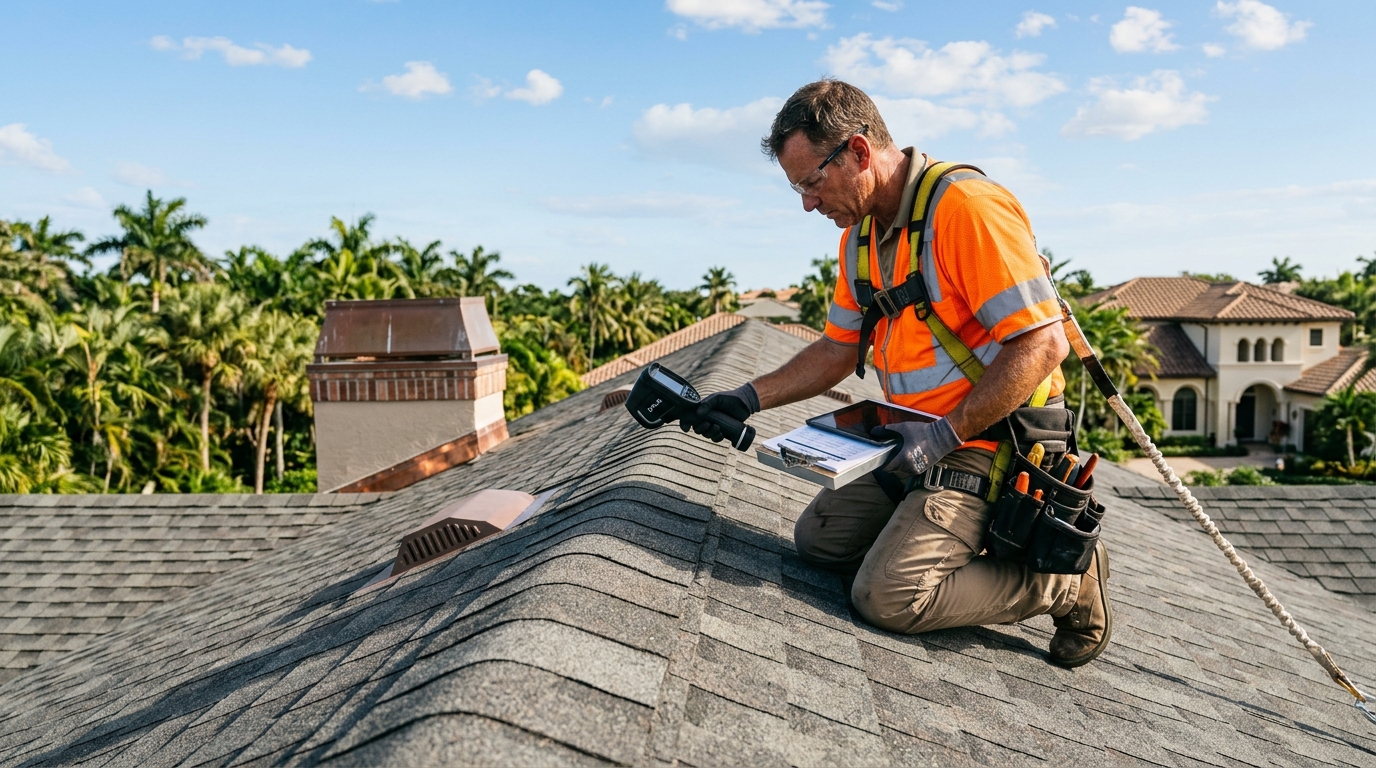
Your roof may look fine from the driveway and still have problems developing around flashing, roof penetrations, underlayment, or the roof deck. In Florida, that matters because intense sun, heavy rain, humidity, and strong winds put repeated stress on roofing materials throughout the year.
So, how long does a roof last in Florida? The answer depends on the material, installation quality, storm exposure, maintenance, and the condition of the entire roofing system, not just the visible surface.
An asphalt shingle roof may need replacement much sooner than a well-maintained metal or tile roof. But choosing a material with a longer expected lifespan does not automatically mean fewer repairs or a lower lifetime cost. The supporting components, workmanship, and local weather exposure matter just as much.
This guide explains the typical lifespan of common roofing materials, the warning signs that deserve attention, and how to decide whether repairing your existing roof or planning a replacement makes more sense.
How Long Does Each Type of Roof Last in Florida?
Roof lifespan figures are estimates, not expiration dates. Two roofs made from the same material can age differently because of their installation, product specifications, exposure, maintenance, and storm history.
The following ranges are useful for initial planning, but your roof's actual condition should determine the next step.
| Roofing Material | Approximate Planning Range in Florida | What Needs Attention |
|---|---|---|
| Asphalt shingles | Around 15 to 25 years for many architectural shingle roofs; basic three-tab products may have shorter service lives | Granule loss, curling, missing shingles, flashing and underlayment |
| Metal roofing | Often several decades; approximately 30 to 50+ years may be a reasonable planning range for some systems | Fasteners, seams, coatings, corrosion and flashing |
| Concrete or clay tile | Tile coverings can last several decades, sometimes 40 to 50+ years or longer | Cracked or displaced tiles, underlayment, flashing and roof attachment |
| Flat or low-slope roofing | Varies considerably by system; some systems may need major work within 15 to 25 years | Drainage, ponding water, seams, membrane condition and flashing |
Planning note: These ranges are not manufacturer warranties or guarantees. Product specifications and local conditions can move the actual lifespan outside them. A hands-on roof inspection and original installation records are far more dependable than relying on chronological age alone.
How Long Do Asphalt Shingle Roofs Last in Florida?
Asphalt shingles are a common choice for homeowners who want a familiar roofing system with a range of product and price options. In Florida, many architectural shingle roofs may provide roughly 15 to 25 years of service, while basic three-tab shingles can have a shorter useful life.
Sun exposure, wind damage, poor installation, attic ventilation problems, and repeated moisture intrusion can all affect performance.
Check your shingle roof for:
- Shingles that are curling, cracking, lifting, or missing after high winds.
- Excessive granules collecting in gutters and downspout splash blocks.
- Repeated leaks around valleys, plumbing vents, or roof edges.
- Similar deterioration across several sections rather than one isolated spot.
If damage is limited to a small area and the surrounding shingles remain in serviceable condition, a targeted repair may be appropriate. If the roof has widespread deterioration or recurring leaks, compare the cost and likely usefulness of repairs with a full replacement.
For complete details on three-tab vs. architectural shingles, curling risks, and granule loss, read our in-depth guide to asphalt shingle roof lifespan in Florida. If your shingles are damaged or curling, explore Roof Work's shingle roofing service and roof repair service.
How Long Does a Metal Roof Last in Florida?
Metal roofing can offer a long service life when the selected system is suitable for the building, installed correctly, and maintained as needed. The lifespan varies with the metal type, panel design, coating, fastening method, environmental exposure, and workmanship.
Standing-seam and exposed-fastener metal roofs should not be treated as identical systems. Their connections, expansion capabilities, and ongoing fastener maintenance needs differ significantly.
Check your metal roof for:
- Corrosion, oxidation, or deteriorating paint finishes.
- Loose, backing-out, or deteriorated exposed neoprene washer fasteners.
- Damaged panel seams, valley transitions, or perimeter flashing.
- Leaks near penetrations, curbs, skylights, and roof transitions.
Homes closer to saltwater bodies (such as Tampa Bay or the Gulf Coast) need particular attention to corrosion-resistant materials such as aluminum and compatible stainless steel fasteners. A metal roof is not automatically immune to wind uplift; the complete roof assembly and its deck attachment matter.
Before replacing another roof with metal, compare the expected service life, initial cost, maintenance requirements, and suitability for your home's roof structure. Read our dedicated guide on metal roof lifespan in Florida, compare options in metal vs. tile vs. shingle roofs, or explore Roof Work's metal roofing service.
How Long Do Tile Roofs Last in Florida?
Concrete and clay tiles can remain in place for decades, but the visible tiles are only one part of the roofing system. The underlayment beneath them helps protect the roof deck against water intrusion and can deteriorate before the tiles themselves reach the end of their useful life.
That distinction is essential when evaluating an older tile roof. A roof may have exterior tiles that appear reusable while its secondary water barrier and valley underlayments need substantial renewal.
Check your tile roof for:
- Cracked, broken, chipped, or displaced tiles.
- Repeated leaks despite replacing individual surface tiles.
- Deteriorated flashing around valleys, sidewalls, and penetrations.
- Signs of moisture saturation beneath the roof covering or in the attic.
Safety caution: Do not walk on roof tiles to inspect them. Tiles can crack easily under foot traffic, and steep, dusty tile surfaces create severe slip-and-fall hazards. Have a qualified, licensed roofing professional assess the tile covering and underlying waterproofing layers.
Depending on the roof's condition, work may involve replacing individual cracked tiles, repairing localized flashing leaks, or performing a tile lift-and-reset procedure to install fresh, code-compliant underlayment while reinstalling existing tiles. For complete details, read our dedicated guide on tile roof lifespan, underlayment, and maintenance in Florida, or explore Roof Work's specialized tile roofing service.
How Long Does a Flat Roof Last in Florida?
Flat and low-slope roofs require a separate evaluation because their drainage design and waterproofing membranes differ fundamentally from steep-slope shingle, tile, and metal roofs.
The lifespan depends on the specific membrane or roof assembly (such as modified bitumen, TPO, or PVC), installation quality, regular maintenance, exposure, and how effectively water drains toward scuppers or internal drains.
Look for persistent ponding water lasting more than 48 hours after a rainstorm, separated seams, blistering or bubbling, deteriorated curb flashing, blocked drain bowls, and recurring interior ceiling stains. Standing water or a leak should never be dismissed simply because the membrane was installed within the last few years.
If you have a flat or low-slope section on your home or commercial building, read our dedicated guide on flat roof lifespan in Florida: TPO, modified bitumen, and maintenance, and always verify that your contractor has specialized experience with commercial-grade membranes before arranging repairs or re-roofing.
Why Florida Weather Can Shorten Roof Lifespan
Florida's climate exposes roofing systems to repeated thermal cycling, heavy moisture, and intense wind forces. These conditions do not affect every material in the same way, and climate alone cannot predict the exact remaining service years on an individual roof.
1. Intense Sun and Repeated Heat Exposure
Florida roof surfaces routinely absorb intense solar radiation, heating up to 150 degrees Fahrenheit or higher during summer months. Over time, ultraviolet exposure degrades asphalt binders, dries out underlayment membranes, and fades protective coil coatings. Thermal expansion and contraction cycles also stress joints, flashings, and fastener seals.
Attic ventilation and moisture control play a critical role. A poorly ventilated attic traps superheated air, baking shingles from underneath and causing structural roof decking to warp. The U.S. Department of Energy emphasizes that maintaining a dry, well-ventilated attic protects whole-home building durability and lowers cooling loads.
What to do: If your roof is aging or your attic feels excessively hot and humid, have the covering, soffit vents, ridge ventilation, and insulation assessed together. Replacing shingles without addressing poor attic airflow will quickly shorten the lifespan of the new roof.
2. Heavy Rain and Recurring Leaks
Torrential subtropical rainfall can quickly overwhelm minor vulnerabilities around valleys, roof edges, vent stacks, and skylight curbs. A pinhole opening in aging sealant can allow wind-driven rain to travel along roof rafters or decking before revealing a ceiling stain several feet away.
In many instances, moisture stains stem from condensate drain lines or plumbing penetrations rather than the roof itself.
What to do: Note exactly where stains appear and whether they expand during active rain. Arrange a professional diagnostic assessment to confirm the moisture source before paying for unneeded repairs. If water is actively penetrating the living space, utilize Roof Work's rapid emergency roof repair service to prevent drywall collapse and mold damage.
3. Tropical Storms and Strong Winds
High tropical winds create aerodynamic uplift forces along roof ridges, eaves, and corners. Wind can lift shingle tabs, break brittle sealant strips, shatter unanchored tiles, and drive flying tree debris into roofing surfaces.
A roof can sustain serious wind damage that is virtually invisible from the ground. The lack of an immediate indoor water stain after a hurricane does not guarantee that your underlayment and perimeter flashings escaped uncompromised.
What to do: After major storm events, walk your property perimeter to inspect for fallen shingles, displaced tiles, or dented metal components. Schedule a professional post-storm evaluation if you suspect uplift. For severe issues, visit our storm damage roof repair service or consider a complete roof replacement.
4. Humidity, Algae, and Moisture Retention
Dark streaks on Florida roofs are frequently caused by Gloeocapsa magma algae spores. While unsightly, algae discoloration by itself does not necessarily mean your roof is failing. However, moss, lichen, and accumulated oak leaves or pine needles hold moisture against shingles and underlayment, preventing natural drying and causing rot.
Improper cleaning is equally dangerous. Aggressive high-pressure washing can strip away protective ceramic granules and force water backward underneath shingle laps.
What to do: Never blast shingles with high pressure. If cleaning is necessary, use gentle low-pressure chemical soft-washing approved by roofing manufacturers. Keep valleys and gutters cleared of pine straw and deciduous leaf litter.
5. Coastal Exposure and Corrosion
Airborne marine salts accelerate corrosion on galvanized steel flashings, standard roof nails, and exposed fasteners. On coastal properties around Tampa Bay, Clearwater, and St. Petersburg, standard hardware can corrode prematurely.
What to do: When replacing roofs or flashings near coastal waters, specify corrosion-resistant materials such as heavy-gauge aluminum, stainless steel fasteners, or copper flashings engineered for marine environments.
7 Signs Your Florida Roof May Need Repair or Replacement
Chronological age is only one factor in your decision. The location and severity of damage, structural decking integrity, and previous repair history are far more informative when determining your next step.
1. Missing, Cracked, or Curling Shingles
A handful of wind-blown shingles may only require a localized repair. However, widespread curling, brittleness, and loss of flexibility across entire roof slopes indicate the asphalt binders have oxidized and the roof is nearing the end of its reliable service life.
Next step: Arrange an assessment to determine whether shingles can still be lifted and sealed without damaging adjacent brittle materials.
2. Granules Collecting in Gutters
A modest amount of loose granule shedding is normal on recently installed shingles. However, persistent, heavy deposits that fill gutters, accompanied by dark bald patches on shingles, mean the fiberglass substrate is exposed to direct ultraviolet rays.
Next step: Have a roofer assess whether the granule depletion is localized or widespread across the exposure plane.
3. Cracked or Displaced Roof Tiles
Broken or displaced tiles expose organic or modified bitumen underlayment to sun and rain. Replacing a surface tile can fix an isolated leak, but repeated leaks across slopes indicate the waterproofing membrane underneath has degraded.
Next step: Request a comprehensive tile roof inspection that inspects the underlayment condition in valleys and transitions, not just a count of cracked tiles.
4. Water Stains on Ceilings or Walls
Brown ceiling rings, peeling paint, or damp drywall indicate moisture intrusion. However, water can originate from plumbing stacks, air-handler condensation pans, or roof penetrations.
Next step: Trace the water trail to its true origin before authorizing repairs. If drywall is sagging or soft, place buckets and seek prompt assistance to avoid a ceiling drop.
5. Damaged Flashing Around Roof Penetrations
Metal flashing seals vulnerable transitions at chimneys, plumbing vents, dormers, and valleys. Corroded, rusted, or detached flashing allows water intrusion even when the shingles themselves look flawless.
Next step: Request detailed inspection photos of all flashing assemblies. Learn more on Roof Work's roof repair service page.
6. Sagging Roof Sections or Damaged Decking
A visible dip or deflection in your ridge line or roof slope signals deteriorated roof decking, compromised rafters, or wood rot from chronic moisture exposure.
Next step: Treat visible roof sagging as an urgent safety matter. Stay off the roof, keep family members clear of the area below, and schedule an immediate structural roofing evaluation.
7. Repeated Leaks or Repairs That Keep Failing
If the same area continues to leak despite multiple caulking patches or tar repairs, the underlying problem was never correctly diagnosed, or water is entering from an upstream transition.
Next step: Assemble previous contractor receipts and photographs. When an aging roof requires continuous spot repairs, a roof replacement assessment offers greater long-term economic protection.
Roof Repair vs. Replacement: How Do You Decide?
The most important question is not simply, "How old is my roof?" It is, "What condition is the roof system in, what is causing the leak, and how many years of reliable weather protection will a repair realistically deliver?"
Use this practical decision matrix to guide your contractor discussions:
| What the Inspection Finds | Option to Discuss With Your Roofer |
|---|---|
| A small, isolated area of damage with otherwise pliable, serviceable roofing | Targeted roof repair |
| A localized leak caused by damaged flashing, a split pipe boot, or cracked vent collar | Flashing or penetration leak repair |
| Repeated leaks in several areas, widespread material brittleness, or extensive hurricane damage | Compare cumulative repair costs with complete roof replacement |
| Aging concrete tile covering with deteriorated, leaking underlayment | Evaluate underlayment condition and determine if a tile lift-and-reset is viable |
| Damaged plywood decking, rotted fascia, or compromised rafters | Remediate structural deck damage before installing the final roof system |
| An older roof triggering insurance renewal notices or cancellation threats | Obtain a documented roof inspection report and confirm carrier underwriting guidelines |
Consider the Roof's Age, But Do Not Use Age Alone
A 16-year-old architectural shingle roof with an isolated pipe boot leak may have several years of healthy service remaining once the rubber collar is replaced. Conversely, a 9-year-old roof installed over unvented decking or damaged by severe wind shear may require immediate replacement. Always prioritize physical evidence over calendar years.
Compare Total Lifetime Cost, Not Just Today's Invoice
A patchwork repair costs less today, but paying for several successive emergency service calls on a failing roof quickly exceeds the cost of financing a new system. Request a written estimate that itemizes necessary structural repairs separately from optional material upgrades.
Understand Florida's 25% Roof Rule Before Authorizing Major Work
The Florida Building Code (Existing Building Volume) contains guidelines often referred to as the "25% roof rule." Under historic provisions, if more than 25% of a roof or roof section was repaired within a 12-month period, the entire roof system had to be brought up to current code standards.
Recent legislative updates created exemptions for roofs built or replaced under post-2007 building codes that remain structurally sound. Do not assume any damaged roof must automatically be replaced, but ensure your contractor verifies building department permitting thresholds before work commences.
How to Extend Your Roof's Lifespan in Florida
Routine maintenance cannot prevent hurricane force winds, but proactive care catches subtle defects before moisture compromises your attic and drywall:
- Keep gutters and drainage valleys clear: Deciduous leaves and pine needles collect in roof valleys, creating natural dams that force standing water underneath shingle edges. Clean gutters at least twice annually.
- Inspect flashing and penetrations: Neoprene pipe boots naturally degrade under Florida UV radiation within 6 to 10 years. Inspect vent boots, chimney flashings, and skylight perimeter seals regularly.
- Keep tree limbs trimmed back: Overhanging branches scrape mineral granules off shingles during storms and drop sap, moss spores, and debris. Maintain a minimum 6-foot clearance between branches and your roofline.
- Avoid unsuitable high-pressure washing: High-pressure water strips shingle granules and voids manufacturer warranties. Only utilize gentle, low-pressure algaecide washes approved by the Asphalt Roofing Manufacturers Association (ARMA).
- Address attic moisture and ventilation: Balance your intake soffit vents and exhaust ridge vents to prevent hot air stagnation. Trapped humidity causes mold growth and premature deck rot.
- Maintain documented records of all roof work: Save every permit, paid invoice, inspection report, and warranty certificate. Documented maintenance protects your property value and proves insurable condition to insurance underwriters.
Can a New Roof Lower Homeowners Insurance Costs in Florida?
Potentially, yes. In Florida, property insurance carriers offer substantial discounts, called wind-mitigation credits, to homeowners whose roofs feature code-compliant hurricane mitigation details.
Under the Florida Office of Insurance Regulation (FLOIR), wind-mitigation inspections evaluate documented building features using the Uniform Mitigation Verification Inspection Form (OIR-B1-1802). Factors that qualify for insurance premium discounts include:
- Roof covering compliance: New roofs installed under the current Florida Building Code with approved Product Approval numbers.
- Roof-to-wall attachments: Heavy-gauge hurricane clips, single straps, or double wraps securing roof trusses to exterior masonry walls.
- Roof deck attachment: Proper nail size (8d ring-shank nails) and close spacing (6 inches along edges) securing plywood decking.
- Secondary Water Resistance (SWR): Self-adhering modified bitumen underlayment (peel-and-stick) covering all plywood deck seams.
- Roof geometry: Hip roof designs receive substantially larger insurance discounts than gable or flat structures because of reduced aerodynamic drag.
For official state guidelines, visit the Florida Office of Insurance Regulation: Wind Mitigation Resources.
What to Ask a Tampa Roofing Contractor About an Aging Roof
Before signing an agreement for repairs or replacement, ask specific questions that link their recommendations directly to your roof's physical condition:
- How much of the roof is actively damaged? Ask whether defects are isolated to one valley or spread across multiple roof exposures.
- What caused the issue? Request clear photos showing whether leaks are caused by cracked pipe boots, wind uplift, or aged underlayment.
- Can the roof be reliably repaired? If replacement is recommended, ask which structural findings make repair unfeasible.
- What components are included in the quote? Verify that the estimate covers tear-off, underlayment type, flashing replacement, rotten wood replacement costs, and dumpster disposal.
- Will you pull a municipal permit? Confirm that the contractor will pull all required city or Hillsborough County permits and coordinate building department inspections.
- What specific products and warranties apply? Request exact manufacturer brand names, wind resistance ratings, and written workmanship warranty periods.
- How are rotten plywood sheets billed? Require a clear per-sheet price in the contract for replacing damaged decking discovered during tear-off.
Frequently Asked Questions About Roof Lifespan in Florida
How long does a roof last in Florida on average?
There is no single lifespan that applies to every Florida roof. Architectural asphalt shingles last approximately 15 to 25 years, while standing seam metal and concrete tile systems can provide 30 to 50+ years of service. True durability depends on installation precision, roof slope, ventilation, and hurricane history.
Do roofs wear out faster in Tampa than in northern states?
Yes, Florida roofs generally degrade faster than roofs in moderate northern climates because of unrelenting ultraviolet radiation, high humidity, and repeated tropical wind events. While northern roofs suffer from snow and ice dams, Florida roofs contend with severe thermal expansion and torrential afternoon rainstorms.
Do tile roofs last longer than the underlayment beneath them?
Yes. Concrete and clay tiles can easily endure 40 to 50 years or more, but traditional organic felt underlayment beneath them often degrades within 18 to 25 years. When leaks occur on an older tile roof, the culprit is almost always deteriorated underlayment rather than broken surface tiles.
Is a 20-year-old roof too old to repair in Florida?
Not always. A 20-year-old roof with pliable shingles and an isolated flashing leak around a plumbing pipe can often be repaired cost-effectively. However, if the shingles are brittle, curling, and losing granules across all slopes, investing money into temporary patches is rarely cost-effective.
Will a roof replacement automatically lower my insurance premium?
A new roof will generally satisfy carrier underwriting guidelines to prevent policy cancellation, but qualifying for premium discounts requires verified wind mitigation features (such as secondary water barriers and 8d ring-shank nailing patterns) documented on an official OIR-B1-1802 inspection form.
Can I extend an older roof's lifespan with a liquid roof coating?
Coatings can restore reflectivity and seal minor surface porosity on certain commercial flat roofs and metal panels, but they are not an appropriate substitute for steep-slope residential shingle replacement. Coatings cannot bridge rotted roof decking, restore unsealed shingles, or replace degraded underlayment.
Get a Clear Assessment of Your Roof's Remaining Service Life
You do not need to replace a roof simply because it has reached a certain age. You do need to understand whether your existing materials are still protecting your home, whether water is reaching structural framing, and whether repairs can reliably restore integrity.
Roof Work helps Tampa Bay homeowners evaluate roofing concerns and compare practical next steps. If you have missing shingles, recurring leaks, cracked tiles, storm damage, or an aging roof, start with a professional assessment of affected areas and overall assembly condition.
We provide written photographic findings, honest recommendations, and transparent itemized quotes, giving you clear answers without sales pressure.
Ready to discuss your roof? Contact Roof Work for a comprehensive roof assessment or replacement estimate, or call our Hillsborough County team at (813) 845-8300.